
York Ebor Festival Place Markets
 Available in US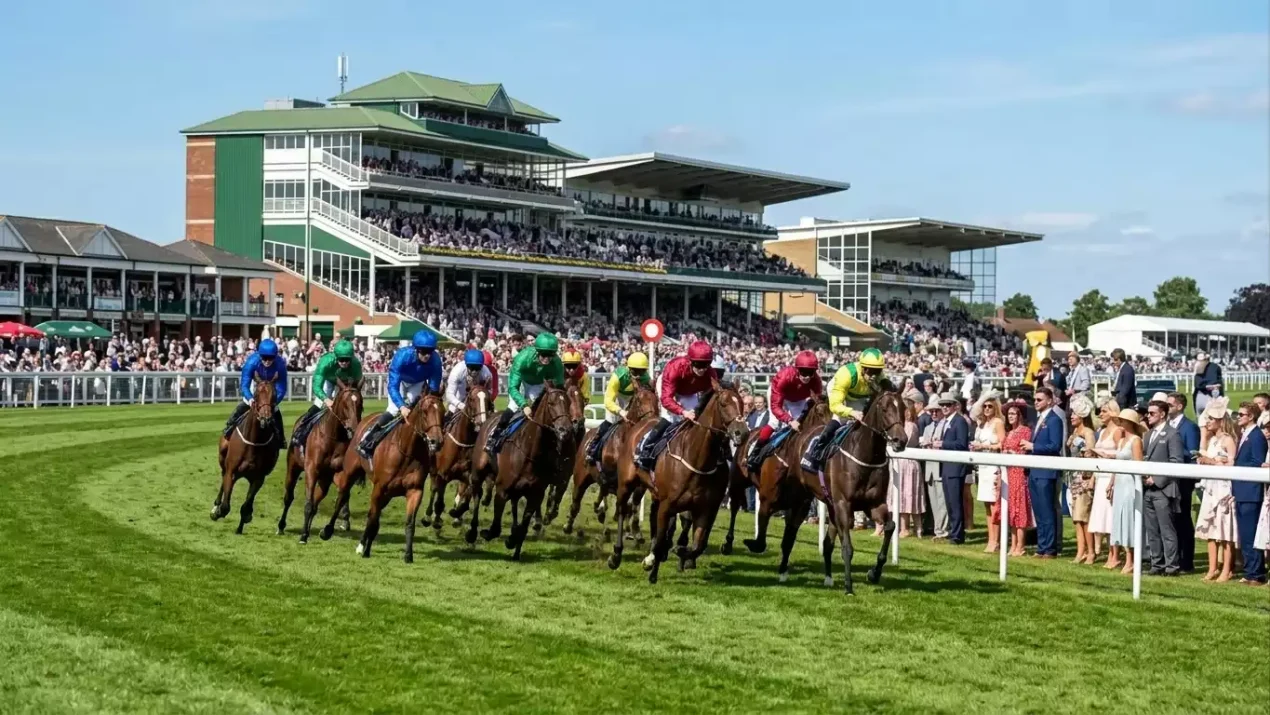
Late-Season Handicaps: Capitalizing on Ebor Festival Liquidity
York 2022, the Ebor itself. A twenty-runner stayers’ handicap, four places paying standard with most firms running fifth-place extras. I’d marked a six-year-old gelding three weeks before — staying on stoutly in middle-distance handicaps through July, dropped a pound in the weights, drawn middle of the pack on ground that was riding fair. Backed each-way at 22/1 with a firm running five places. The horse finished fifth, beaten just under three lengths, picked up the extra place. £20 stake returned £125. The other twelve bets I’d placed across the festival lost a combined £150. Net result: profit on the week thanks entirely to one big-field handicap selection and one bookmaker running an extra place. That is York’s Ebor Festival in essence — the value lives in a handful of identifiable race types and disappears the moment you stray from them.
The Ebor Festival runs across the second-to-last week of August every year, four days of premium flat racing across Wednesday to Saturday. The meeting carries six Group 1 races, multiple Group 2 and 3 contests, and three substantial handicaps with the Ebor itself as the centrepiece — one of British racing’s most valuable handicaps and historically one of its most punter-friendly each-way markets. Total prize money exceeds £6 million across the four days.
I have been treating York as a four-day project every August for the past decade. The lessons I keep relearning are about race selection, draw analysis on the unique Knavesmire layout, and the value of patience when the festival opens.
Why York’s race programme produces better place value than Royal Ascot
An unpopular claim among flat racing traditionalists, but the maths supports it. York’s Ebor Festival programme has structurally different race composition from Royal Ascot, and the differences favour place punters meaningfully.
Bigger handicap fields proportional to the card. The Ebor itself runs at twenty runners as standard, the Melrose at twenty, the Sky Bet Handicap on the Thursday at sixteen to twenty. These large competitive fields are where four-place each-way terms operate alongside extras places promotions — a five-place or six-place handicap with twenty runners is structurally generous to the punter.
Fewer Group 1 contests proportionally. Royal Ascot runs eight Group 1 races across five days. York’s Ebor Festival runs four Group 1 races across four days. Group 1 races offer the worst place value in the calendar — small fields, efficient pricing, short-priced favourites. The lower density of Group 1 racing at York means a higher proportion of the meeting’s races are in the value-rich handicap and Group 2/3 categories.
The Knavesmire’s unique geometry. York’s racecourse is a left-handed galloping flat track with long sweeping bends and a four-furlong run-in. Front-running types and hold-up horses are equally well-suited depending on the pace scenario, which produces more competitive finishes and more places-in-play than tighter tracks. Handicap settle patterns at York frequently see five or six horses fighting for the placed positions deep into the home straight.
The combination produces a meeting where the casual punter who follows famous horses and famous trainers is at a structural disadvantage relative to the form student who can identify well-handicapped stayers in big-field handicaps. The latter is who York rewards.
Draw bias on the Knavesmire and how it shapes place pricing
York’s draw bias on the straight course is one of the most discussed and most misunderstood factors in British flat racing. The traditional view is that high numbers race up the stand-side rail get an advantage on softer ground, while low numbers on the far rail are favoured on firmer ground. The reality is more nuanced and changes meeting to meeting depending on rail positions, going, and field pattern.
What I have learned to do is watch the first three or four races of each day before committing serious stakes on the straight course races later in the card. The actual race pattern on the day is more informative than the historical draw bias data. If the field is migrating to the stand rail in the first sprint of the day, the same pattern is likely to hold across subsequent races, and horses drawn favourably for that pattern get an implicit boost.
On the round course — where the Ebor runs, along with the Lonsdale, Yorkshire Oaks, and most of the meeting’s premier races — draw bias is less dramatic but still matters. Low draws benefit on the round mile because the run to the first bend is short. High draws can be at a real disadvantage if the early pace is sharp, getting caught wide and losing several lengths before settling. Pre-race analysis should factor draw into the place market price, and consistently the market underprices the impact of an unfavourable draw on the round course.
This is where the place market on the exchange often diverges meaningfully from fixed-odds pricing. Exchange traders are more attentive to draw and pace dynamics than the casual fixed-odds money is. On a horse with a poor draw, the exchange place price will typically be longer than the fixed-odds equivalent — sometimes substantially. The reverse is also true. A horse with a strong draw advantage often trades shorter on the exchange than at the high-street firms. Cross-checking the two markets ten minutes before the off is a useful sanity check on whether your fixed-odds price reflects the real probability or is leaking edge to the structural factors.
The four handicaps that define the meeting
York’s Ebor Festival is built around four substantial handicap contests, and they account for the majority of my staking across the meeting. Each has distinctive characteristics that shape how I approach the place market.
The Ebor itself. Twenty-two runners on average in recent renewals, four places paying standard, extras places typically pushing to five or six. A stayers’ handicap with horses generally in the 8/1 to 50/1 range in the place market. Form study focuses on horses who have been gradually improving over middle distances through the summer and are stepping up to the Ebor trip. The race rewards stamina that has been demonstrated, not just predicted. I prefer outsiders with two solid runs at fourteen furlongs or longer in their last four starts.
The Melrose Stakes. Twenty-runner handicap for three-year-olds over a mile and three-quarters. Less developed form lines than the Ebor because the runners are still progressing, more market noise, more opportunity for value. Five-place extras are commonly available. The Melrose has paid out at long prices in recent renewals more often than the Ebor itself.
The Sky Bet Handicap. Sixteen-runner six-furlong sprint handicap on the Thursday. The most pace-dependent race of the meeting. Draw bias on the day will determine whether the race is won from the front or from off the pace. Watch the early races on Thursday and commit stakes only after the day’s pattern is visible.
The Symphony Group Handicap. Mid-card mile handicap, sixteen to eighteen runners typically. Less promoted than the big three but with comparable each-way value. Often overlooked because it doesn’t carry the same prize money or media attention. Quietly one of the best each-way races of the festival.
Outside these four, the handicap programme at York is smaller than Royal Ascot’s, so concentrate your place stake. Spreading too thin across the festival’s group races dilutes the focus on the handicaps where the value actually lives.
The promotional layer and how it compresses through the week
UK bookmakers run extras places and BOG promotions throughout Ebor week, with the most generous terms typically reserved for the Ebor itself and the other featured handicaps. The promotional intensity peaks on Saturday Ebor Day and tapers slightly across the meeting.
The Wednesday opening day historically sees the most competitive opening pricing. Firms aren’t yet sure how the meeting will play out, draw biases haven’t been observed, and prices are typically generous on outsiders. Promotional extras places are commonly available on the Wednesday handicaps but the terms are sometimes lighter than the Saturday equivalents — five places at 1/4 odds rather than six places.
By Friday and Saturday, the headline promotional offers have expanded. Six-place extras places on the Ebor are standard at most major firms, with one or two firms occasionally pushing to seven places at reduced odds. The Saturday handicaps typically carry the most competitive promotional terms of the week. This is intentional — Saturday delivers the highest casual betting volume and the firms invest accordingly in promotional attractiveness.
One thing to verify on every promotional offer is the qualifying criteria. Some extras places offers require a minimum stake, some require the bet to be placed within a specific time window before the off, some require the bet to be placed through specific channels (app only, for example). Reading the terms attached to each offer takes thirty seconds and prevents the disappointment of finding your bet doesn’t qualify when the horse finishes fifth.
Attendance, prize money and the meeting’s long-term trajectory
The Ebor Festival sits within a broader pattern of growing UK racecourse attendance. The 2025 figure of 5,031,640 across British racing was up 4.8 percent year-on-year and the first time the total exceeded five million since 2019, with the average attendance per fixture rising 3.6 percent to 3,526. York’s August festival has been one of the consistent drivers of that growth — the Saturday Ebor Day typically draws over 30,000 attendees and the four-day total usually exceeds 100,000.
Prize money has tracked the broader trend across British racing. Total prize money distributed in 2025 reached £72.7 million, an increase of £2.2 million on the previous year, with York’s contribution among the highest of any meeting on the calendar. The festival’s commercial structure underpins the betting market — high prize money attracts deeper fields, deeper fields produce more competitive racing, more competitive racing produces better place market value for the punter.
What is less visible from the headline numbers is what is happening to betting turnover. Per-race turnover in British racing fell 8 percent year-on-year in 2024-25 and was 19 percent below 2021-22 levels, with the trend continuing into Q3 2025 where turnover was 12.8 percent below 2023. This squeeze has affected the funding structures underpinning major meetings but has not yet visibly reduced field sizes or prize money at York’s festival. The festival’s commercial position appears to be holding up better than the average British fixture, partly because of the meeting’s strong international profile and partly because of the strength of the underlying handicap programme.
Treating York’s four days as a discipline rather than a flutter
The structural case for York as a profitable place-betting week is sound but it depends on treating the meeting as serious work rather than as a casual visit. The handicaps reward form study. The draw biases reward attention to the day’s pattern. The extras places promotions reward careful comparison across firms. The exchange place market rewards punters who cross-check pricing against the fixed-odds market.
None of this is mysterious. All of it requires time and attention across four consecutive days. For punters who can commit that engagement, York’s Ebor Festival is one of the best opportunities of the flat racing calendar. For punters who cannot, the meeting becomes another expensive television event where casual bets on famous names underperform the maths. The choice is yours, but the discipline-versus-flutter divide is sharper at York than at most British meetings. For the structural mechanics of how field size determines what each market actually pays, the breakdown of place bet calculator explained covers the underlying numerical relationships that drive every place return at the festival.
Why does the Ebor handicap consistently offer good each-way value?
Large field of twenty-plus runners, four places paying as standard with extras places promotions pushing to five or six, prices spread widely across the field, and a stayers’ contest where form lines are more developed than in shorter handicaps. The combination produces structurally generous each-way maths.
How important is the draw at York?
On the round course, low draws benefit on the round mile because of the short run to the first bend. On the straight course, draw bias varies by going and field pattern. Watch the early races each day before committing on the later races to confirm the prevailing pattern.
Are the promotional extras places at York comparable to Royal Ascot’s?
The promotional terms are similar in structure with five or six-place extras commonly available on the major handicaps. The specific generosity varies firm by firm and is typically more competitive on Saturday than on the earlier days of the meeting.
This material was created by the PlaceLedger team.
Related posts
In-Play Place Market Mechanics: How Live Pricing Actually Works During a Race
UK Betting Taxation: How the Punter’s Tax-Free Status Actually Works