
Tote and Britbet Place Pools: UK Pari-Mutuel Betting
 Available in US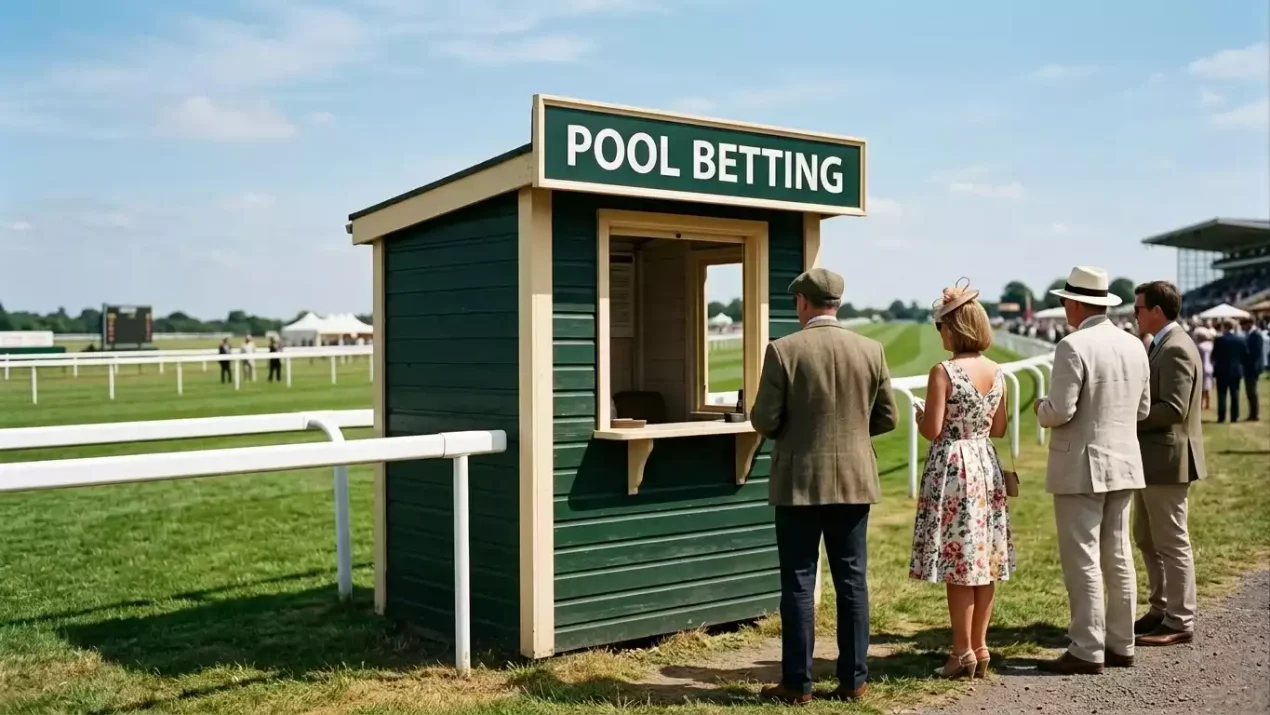
The afternoon I cashed my first placepot at Newmarket
Roughly six years ago, on a cold October afternoon at Newmarket, I cashed my first placepot. The dividend was £37 and change on a £5 stake — a 7/1 return on a structurally pool-favourable card with a couple of priced-up favourites failing to place. I remember the bet vividly not because the dividend was large but because the maths underneath it was completely unlike anything I’d done with fixed-odds bets. The Tote dividend didn’t track the bookmaker prices on the morning’s slips; it tracked the proportion of placepot stakes that had selected the actual placed runners, race by race, across the entire afternoon. If you prefer pool betting, learning a solid placepot strategy can help you build perms that consistently yield positive returns.
That distinction — pool dividend versus fixed-odds price — is the entire pivot of this article. The Tote, the placepot, the quadpot, the Britbet pools, and the rest of the British pari-mutuel betting infrastructure operate on a fundamentally different commercial logic from the fixed-odds bookmakers most punters use day-to-day. Pool punters bet against each other, not against the operator’s price. The dividend is determined after the race, by the size of the pool and the number of winning tickets. The result is a place market that sometimes pays far more than the fixed-odds equivalent, sometimes pays meaningfully less, and almost always rewards a different style of selection from the fixed-odds approach.
Around £766.7 million in Gross Gambling Yield flows through horse racing remote betting in a typical year in the UK — the second-largest sport on the British online market after football. A meaningful slice of that activity, particularly on the on-course and Tote-direct side, runs through pool products rather than fixed-odds. The casual punter who never strays beyond the bookmaker’s win-place line is missing an alternative that, on the right race, materially outperforms.
Pool Betting Mechanics: Comparing Tote and Fixed-Odds Returns
The Horserace Totalisator Board — the Tote — was established by Act of Parliament in 1928 to provide a regulated pool-betting alternative to on-course bookmakers. For most of its history, the Tote was a government-owned operation; in 2011 it was sold to Betfred, and in 2019 the Tote was acquired by a consortium led by Alex Frost and including significant racecourse ownership. The current operating brand — Tote/Britbet — runs both the historical Tote products (placepot, quadpot, Trifecta, Exacta, Jackpot) and a separate pool-betting offering, Britbet, which was launched as a racecourse-owned alternative and subsequently integrated with the Tote.
The history matters because the products are unique. Pool betting in the UK is essentially a Tote/Britbet monopoly; fixed-odds bookmakers can offer pool-style products under certain commercial arrangements with the Tote, but the underlying pari-mutuel pool — where stakes are aggregated and dividends are calculated after the race — is operated by Tote/Britbet on every British racecourse. When you place a Tote bet, you are betting into the same pool whether you bet through the Tote website, a fixed-odds bookmaker offering Tote integration, an on-course Tote window, or the Tote’s app.
British racecourse attendance crossed five million spectators in 2025 for the first time since 2019 — total attendance reached 5,031,640, up 4.8 per cent year on year — with average attendance per fixture rising to 3,526 across the 1,427 fixtures of the year. That on-course audience is the historical heartland of pool betting, and it still represents a meaningful share of Tote turnover. The Q1 of 2026 carried the momentum forward, with 696,611 attendances representing a further 4.5 per cent increase over Q1 2025, and the Cheltenham Festival of last March drawing 225,252 spectators across the four days, a 3.3 per cent rise.
Alex Eade, the chief executive of the Racecourse Association, framed the early 2026 figures in clear terms in the RCA’s Q1 commentary: “It’s great to see the hard work of racecourse teams reflected in a continuation of the positive 2025 attendance figures into the first quarter of this year. The RCA team have worked closely with Great British Racing to ensure the insight from Project Beacon is embedded at every level.” Project Beacon is the racing industry’s customer-engagement initiative; the on-course audience it reaches is the same audience that bets into Tote pools at the rail, in the tote queues, and through the Tote app while watching the racing live.
How a pool place bet actually pays out
The mechanics of a pool place bet are different enough from fixed-odds that they bear careful walking through. When you place a Tote Place bet of, say, £5 on a horse to finish in the qualifying place positions of a race, your £5 goes into a single pool with every other punter’s place stake on every other horse in that race. After the race, the total pool is divided into segments — one segment per placed horse — and the dividend per placed horse is calculated as the total pool divided by the number of winning tickets on that horse, after deducting the Tote’s takeout (the operator’s commercial margin).
The number of place positions paid on a Tote Place bet follows broadly the same field-size schedule as fixed-odds bookmakers. Two places paid on fields of five to seven runners; three places on fields of eight or more; four places on handicaps of 16 or more runners. The standard British place schedule applies. What differs is how the dividend per placed horse is calculated.
Suppose a six-furlong handicap has 12 runners and total Tote Place pool of £8,000. Three placed horses, takeout of (let’s say) 19 per cent, so the distributable pool is £6,480. That £6,480 is divided into three equal segments of £2,160, one segment per placed horse. The first-placed horse’s £2,160 is then divided among the punters who backed that horse to place; if 200 punters backed that horse with an average stake of £4 (so £800 in stakes on the winning ticket), the dividend per unit stake is £2,160 / 800 = £2.70. The £4 ticket pays £10.80, including the original stake. That’s a 1.7/1 return on the place bet.
The same race, settled on a fixed-odds slip at one-fifth of the bookmaker’s win price, might have paid 2/1 on a horse that traded at 10/1. The pool, in this hypothetical, pays slightly worse than the fixed-odds equivalent. But change the assumptions — fewer punters on the winning placed horse, a smaller pool with a heavier takeout, an outsider that nobody backed to place — and the pool dividend can swing well past the fixed-odds equivalent. A horse with very few placed-ticket holders sometimes returns £20, £30, even £50 per £1 stake when it places at long odds in a small pool. Those headline pool dividends are the reason experienced pool punters keep coming back.
The fundamental asymmetry: fixed-odds prices are set by the bookmaker before the race and reflect the bookmaker’s view of probability plus their commercial margin. Pool dividends are set by the betting public’s stakes during the race build-up and reflect collective conviction. When the public is wrong about the placed horses — backing the wrong favourites, missing an outsider in the placed positions — the pool dividends compensate the discerning punter who took the contrary view.
The placepot and quadpot in plain English
The placepot is the Tote’s signature product, and it’s the bet that most defines British pool place betting. The placepot is a single bet covering the first six races at a designated meeting — historically the daily Tote-nominated card — in which you select one or more horses to place in each of the six races. If your selection (or any one of your multiple selections) places in race one, you progress to race two. Place in race two, progress to race three. Place in all six races, and you collect a dividend.
The dividend is calculated as the total placepot pool, minus the Tote’s takeout, divided by the number of winning placepot tickets. A placepot dividend of £200 to a £1 stake is common on a typical Saturday. A placepot dividend of £2,000 or more appears when a heavy favourite fails to place in one of the six races and clears most of the placepot field from contention.
The quadpot is the placepot’s younger sibling — same logic, but applied to four races (the middle four of the placepot’s six races). The smaller race set produces a more achievable bet with a correspondingly smaller average dividend, and the quadpot is the entry-level product for punters who want to try pool place betting without committing to the longer six-race exposure of the full placepot.
Two technical points on placepot mechanics that catch first-time pool punters out. The first is non-runners. If a horse you selected in any of the six placepot races doesn’t run, your stake on that horse is reallocated to the SP (starting price) favourite for the race. That reallocation is rarely what you want — the SP favourite is usually overbet relative to its true place probability — but it’s the default. Some operators allow you to nominate a different replacement at the time of strike; check the specific terms.
The second is multiple selections. You can select more than one horse per race on a placepot, and each combination of selections is treated as a separate “line.” A placepot with two selections in race one, three selections in race two, and one selection in each of races three through six is 2 × 3 × 1 × 1 × 1 × 1 = 6 lines. At a £1 stake per line, the total stake is £6. The dividend is paid per winning line, so if all your selections place in their respective races, every line pays the headline dividend. The variance is brutal: most placepot tickets lose at race two or race three, and the punters who do collect typically have many lines on the ticket.
The placepot is, in my experience, the British pool product that produces the cleanest illustration of pari-mutuel logic. The dividend is genuinely shaped by collective conviction across six races, and the placepot dividends published after each meeting are a kind of crowdsourced summary of which races on the card the public got right and which they got wrong.
Pool place versus fixed-odds place
The cleanest way to think about pool place versus fixed-odds place is as two different products that share a common underlying outcome (the placed horses) but pay differently based on different commercial logic. Fixed-odds pays a known price determined before the race. Pool pays an unknown dividend determined after the race by the pool size, the number of winning tickets, and the operator’s takeout.
On the fixed-odds side, the bookmaker’s margin is built into the displayed price. A 10/1 horse’s true win probability is implied by the bookmaker’s full book; the place fraction at one-fifth is a structural commercial decision that compresses the margin further on the place side. The punter sees the price, decides whether it’s value relative to their model, and stakes accordingly. The outcome is contractual: if the horse places, you receive the published price multiplied by your stake.
On the pool side, the “price” you receive is unknowable in advance. You can see the size of the pool building up before the off, you can see how many tickets are in the placepot before race one starts, but you can’t see the final dividend until the race is run and the winning tickets are counted. That uncertainty is part of the pool’s character — and part of why pool place bets reward a different kind of analysis from fixed-odds place bets.
The structural takeout differs. Fixed-odds bookmakers extract margin through the price spread (the difference between the implied probabilities of all runners summing to more than 100 per cent). Pool operators extract margin through an explicit deduction from the pool before the dividend is calculated — typically 19 per cent to 30 per cent depending on the bet type. The pool takeout is in many cases higher than the fixed-odds margin on a single race, which is why pool dividends on heavily-backed favourites are usually worse than fixed-odds prices on the same horse. The compensation is that pool dividends on outsiders, or on races where the public misreads the placed runners, can be dramatically better than fixed-odds.
Tote’s takeout on Place bets is in the high teens to low twenties per cent range; the placepot’s takeout is in the mid-to-high twenties; the Jackpot and Trifecta carry heavier takeouts. The headline takeout figure is published by the Tote and binds across all access points (on-course, Tote app, integrated bookmaker). The placepot’s higher takeout is compensated by the structural variance — a placepot dividend can be 100/1, 500/1, occasionally 1000/1 or more on the right card.
For the everyday place punter, the rule of thumb I’d offer is this. On a single race with clear bookmaker favourites and a settled fixed-odds price, fixed-odds usually pays better than pool, because the bookmaker’s commercial margin per race is thinner than the Tote’s takeout. On a six-race accumulator, the placepot beats a fixed-odds each-way Lucky 15 most of the time, because the pool dividends on the right placed-horse combinations far exceed the fixed-odds returns on a stacked multiple. The cross-over depends entirely on race profile, field size, and public conviction.
Minimum stakes and how to access the pools
Tote pool products carry minimum stakes that have stayed stable for years. The placepot’s minimum stake is £1 per line. The quadpot’s minimum is the same £1 per line. Tote Place singles have a minimum stake that varies slightly by access point — typically 50p to £1 — and Jackpot, Trifecta and other exotic pool products start at similar levels.
Access to the pools comes through four routes. The Tote’s own website and app is the most direct; you can stake any pool product on any British race meeting through the Tote’s platform. On-course Tote windows at every racecourse take cash and card stakes, with the same minimum thresholds. Several UKGC-licensed fixed-odds bookmakers integrate the Tote pools into their own platforms, allowing you to stake placepots and Tote Place bets through your existing bookmaker account. Britbet-branded pool products are integrated with the Tote and accessible through the same channels.
The on-course experience is genuinely distinctive. The Racecourse Association reported that average attendance per fixture in 2025 reached 3,526 — the highest since 2019 — and that under-18 attendance grew by 17 per cent year on year. That growing audience represents both a commercial opportunity for the Tote and a meaningful share of pool turnover that doesn’t get captured in the online-betting statistics. If you’ve never bet on-course, the Tote ring is part of the British racing experience that pays for itself even if your bets don’t.
One practical point worth flagging. The Tote runs minimum-pool guarantees on some of its biggest meetings, where the operator commits to a minimum total pool size on the placepot regardless of public stake levels. On a guaranteed-pool day, even a small ticket benefits from the operator’s commitment to underwrite the pool to the published minimum. The guaranteed pools are usually published on the Tote’s website in advance, and they’re worth seeking out — your money goes further into a guaranteed pool because the dividend floor is structurally protected.
The on-course betting ring as the original pool
I have a soft spot for the on-course betting ring, which I’d argue is the British place market in its most honest form. The ring at Newmarket on a Saturday or at Ascot on a Royal Meeting day is a working pari-mutuel market in slow motion — the prices on the rail bookmakers’ boards flex in response to the bets being struck, and the Tote pool builds in parallel as on-course punters queue at the windows to back their selections.
The on-course Tote operation is a substantial part of the racing industry’s commercial fabric. Racecourse attendance crossed five million in 2025, with average attendance per fixture climbing to its highest level since 2019. That on-course audience remains the backbone of pool turnover, and the pool dividends on weekend racing at the major courses still benefit materially from rail-side stakes. The under-18 attendance growth of 17 per cent year on year, which the Racecourse Association highlighted as a leading indicator of the sport’s future audience, hints at a generation of new punters whose first exposure to the place market will be the Tote queue rather than the bookmaker’s app.
The on-course ring also offers something that no online product can replicate: real-time visibility on which horses the market is settling around. The bookmakers’ boards in the ring update by the second; the Tote display shows the running pool sizes; the spread between the front of the market and the back of the market on a 16-runner handicap is visible in a way that the online experience flattens. For punters who like to time their stake carefully — taking the place price before the market shortens, or backing an outsider as the public moves to the favourite — the ring is genuinely better.
The on-course ring is also a connection back to the historical foundations of British place betting. The Tote was established to provide a pool alternative to the on-course bookmakers — not to replace them, but to coexist with them — and the resulting two-tier market (fixed-odds in the ring, pool through the Tote windows) has been the structure of British place betting for nearly a century. The online evolution of the last twenty years has overlaid that structure with fixed-odds bookmaker apps and Tote integration, but the on-course ring remains the cleanest expression of the underlying market dynamics.
Which races structurally favour the pool
Not every race rewards a pool place bet. The Tote’s commercial margin and the public’s collective conviction interact in ways that produce a fairly clear pattern of which race profiles favour pool over fixed-odds.
The first profile is the big-field handicap with a wide spread of placed-horse possibilities. A 20-runner handicap on a Saturday afternoon, with five or six horses priced under 10/1 and the rest at 16/1 or longer, is the textbook pool-favourable race. The pool dividends on the long-priced placed horses can be dramatically better than the fixed-odds equivalents, and the public’s tendency to crowd onto the front of the market leaves room for the discerning pool punter to capture outsized dividends on outsiders.
The second profile is the six-race afternoon programme where the favourites are well-priced but vulnerable. Placepot dividends are driven by races where at least one heavy favourite fails to place, clearing the favourites-only tickets from the pool and leaving the dividend distributed across a smaller number of winning tickets. A card where every favourite is priced at evens or shorter is generally not pool-favourable — too many placepots survive race one and dilute the pool. A card where every race has a 7/4 or 9/4 favourite with genuine doubts is the cleanest pool opportunity.
The third profile is the on-course meeting with limited online stake exposure. Smaller midweek meetings at provincial courses produce smaller pools but also less efficient public conviction; the punters who do bet on those races are often closer to the action and the pool dividends can reflect more accurate consensus. Counter-intuitively, the high-profile festival meetings often produce more efficient pool dividends because the volume is high enough that the public’s collective view is fairly accurate.
The fourth profile is the race where you have a strong view on an outsider placing. Pool place dividends on outsiders are structurally better than fixed-odds on the same horse, because the pool’s takeout is paid once on the whole pool while the fixed-odds book extracts a margin twice on the win and place sides of an each-way. A 33/1 horse you fancy to place is meaningfully better value through a Tote Place bet than through a fixed-odds each-way.
Conversely, the races that don’t favour pool are the short-priced Group races with heavy odds-on favourites and small fields. The pool dividend on an odds-on favourite placing in a 10-runner Group 1 is usually worse than the fixed-odds place price; the public’s conviction is too concentrated, and the pool’s takeout eats the dividend. Fixed-odds is the better channel for that profile.
One trend worth noting: turnover per race on British racing has fallen year on year for several seasons, with the headline figure down 8 per cent in 2024–25, 15 per cent against 2022–23, and 19 per cent against 2021–22. The same trend is visible in the pool products, though the pools at major festival meetings remain robust. For routine midweek pool betting, smaller pools mean more variance in dividends but also more opportunity for the disciplined punter to catch outsize returns. The pool product is, in some ways, becoming a more interesting bet as the on-course and dedicated-pool audience consolidates around a smaller core of regular punters. Tracking the racecourse attendance trends is a useful exercise for anyone seriously considering the pool channel.
Frequent questions on Tote and Britbet place pools
How is a placepot dividend actually calculated when multiple winners pick the same horses?
The placepot pool is aggregated across the entire meeting before the first race goes off, with the operator’s takeout — typically around 27 per cent — deducted from the pool before dividends are calculated. After all six races are run, the remaining pool is divided by the number of winning tickets — tickets that selected a placed horse in every one of the six races. If 100 tickets survive, the per-ticket dividend is the post-takeout pool divided by 100. Multiple-line tickets pay separately on each winning line, so a punter with three winning lines collects three times the per-ticket dividend. The headline dividends published by the Tote are always per £1 stake on a single winning line, so a £5 stake on a single line at a £200 dividend would pay £1,000.
Can I take Tote place bets online and how do dividends compare with fixed odds?
Yes — Tote and Britbet pool products are available through the Tote’s own website and app, on-course Tote windows, and several UKGC-licensed fixed-odds bookmakers that integrate the pools into their platforms. Dividends compare with fixed odds in a structural pattern: pool generally pays worse than fixed odds on heavily-backed favourites (because the public’s stake concentration depresses the dividend) and pool generally pays better than fixed odds on outsiders, on small-pool races, and on placepots where favourites have failed to place. The cross-over depends on each specific race profile, but the general rule of thumb is that pool is the better channel for outsiders and accumulators, fixed-odds is the better channel for short-priced singles.
What happens in a placepot if my selection is a non-runner?
A non-runner in any of the six placepot races triggers an automatic reallocation. Your stake on the non-runner is reallocated to the SP (starting price) favourite for that race, with the placepot ticket continuing into the next race as if the SP favourite had been your original selection. This reallocation rule is the default across all Tote pool products and is uniformly applied; some operators offer a pre-race nomination feature allowing you to specify your preferred replacement, but the default is the SP favourite. The reallocation can save a placepot ticket where the SP favourite places, or it can extinguish the ticket if the SP favourite is one of the placepot’s high-conviction failures.
A final word from the rail
Pool place betting is the British place market’s quietly different channel — a different commercial logic, a different calculation of dividend, a different mode of analysis, all running in parallel to the fixed-odds market that dominates online betting headlines. It rewards a different skill set. Reading the placepot card is closer to playing poker than to betting fixed-odds singles; you are betting against the field’s collective conviction rather than against the bookmaker’s price, and the right races for pool betting are not always the right races for fixed-odds.
If you bet on British racing seriously, the Tote and Britbet pools deserve a place in your repertoire — not as the only channel, but as a complementary one. The placepot in particular, for a £1-per-line stake, is one of the cheapest entries in British betting and one of the most rewarding when the card cooperates. The on-course Tote queue, on a Saturday at a properly attended meeting, is one of the better experiences in British racing. Try it, learn the rhythm, and add it to your toolkit. The pool dividends will repay the effort. Find the most accurate odds comparisons and daily tips at the premier UK place betting site.
This material was created by the PlaceLedger team.
Related posts
In-Play Place Market Mechanics: How Live Pricing Actually Works During a Race

UK Betting Taxation: How the Punter’s Tax-Free Status Actually Works