
UK Place Betting: Terms, Bookmakers, and Maths
 Available in US
The British place-bet field, charted from post to wire.

A place bet is a single wager that your horse will finish inside the paid positions of a race — usually first, second, third, or fourth, depending on field size. An each-way bet is something else entirely: two separate stakes glued together, one on the horse to win and one on it to place, settled independently. I have spent eight years walking British punters through that distinction, and I still get the same blink of surprise when they realise the slip they thought was a "place bet" was actually an each-way double paying half tax on a flat 7/2 shot.
Britain's gambling industry turned over £16.8 billion in Gross Gambling Yield in the year to March 2025, and remote betting on horse racing alone generated £766.7 million — second only to football among online sports. Roughly five million people walk through racecourse gates each year. Yet most of them place bets without knowing whether their bookmaker is paying 1/4 of the odds on three places or 1/5 on four, and the difference can swing the maths from a winning system to a leaking one.
This guide is for the British punter who wants to fix that gap. I will work through what "to place" actually means under UK rules, why the fraction matters as much as the price, how field size dictates the number of places paid, what the major festivals do to enhance those terms, and how the 2026 regulatory reset changes the landscape from a duty, levy, and risk-check perspective. The maths is plain, the examples are British, and the operator names stay out of any "best of" list — because the point is to teach you how the place market works, not to sell you a welcome bonus.
The British Place Market at a Glance
- A place-only single is one stake on a horse to finish in the paid positions; an each-way is two stakes — win plus place — and a £10 each-way is £20 through the till.
- Standard UK place terms: 5–7 runners pay two places at 1/4, 8+ pay three at 1/5, and 16+ runner handicaps pay four at 1/4 — the most generous baseline.
- Remote horse racing betting generated £766.7 million in GGY in the year to March 2025.
- From April 2026, Remote Gaming Duty rises to 40% but horse racing GBD is exempt; the £150 net-deposit risk-check threshold is live.
- Stay on the UKGC register — offshore "extra-place" offers carry no recourse, no protection, and lose roughly £10 million of Grand National stakes a year.
What a Place Bet Actually Is in UK Racing
A few seasons ago, an old colleague of mine — a former on-course bookmaker turned form analyst — leaned across the table at a Lingfield card and asked me how I would explain "to place" to his nephew, who had never bet on a race in his life. I told him: a place bet pays out if your horse finishes within the official places for that race, end of story. He laughed. "Now tell him what 'the official places' means," he said, "and watch his face."
In British racing, a single place bet is a fixed-odds wager on a horse to finish inside the paid positions, without any requirement that it wins. If the race pays three places and your selection finishes anywhere from first to third, the bet wins. If it finishes fourth, it loses — even by a nostril. The bookmaker settles the bet at a pre-agreed fraction of the win odds, not the full price. That fraction, and the number of paid positions, together form what the industry calls the "place terms" of the race.
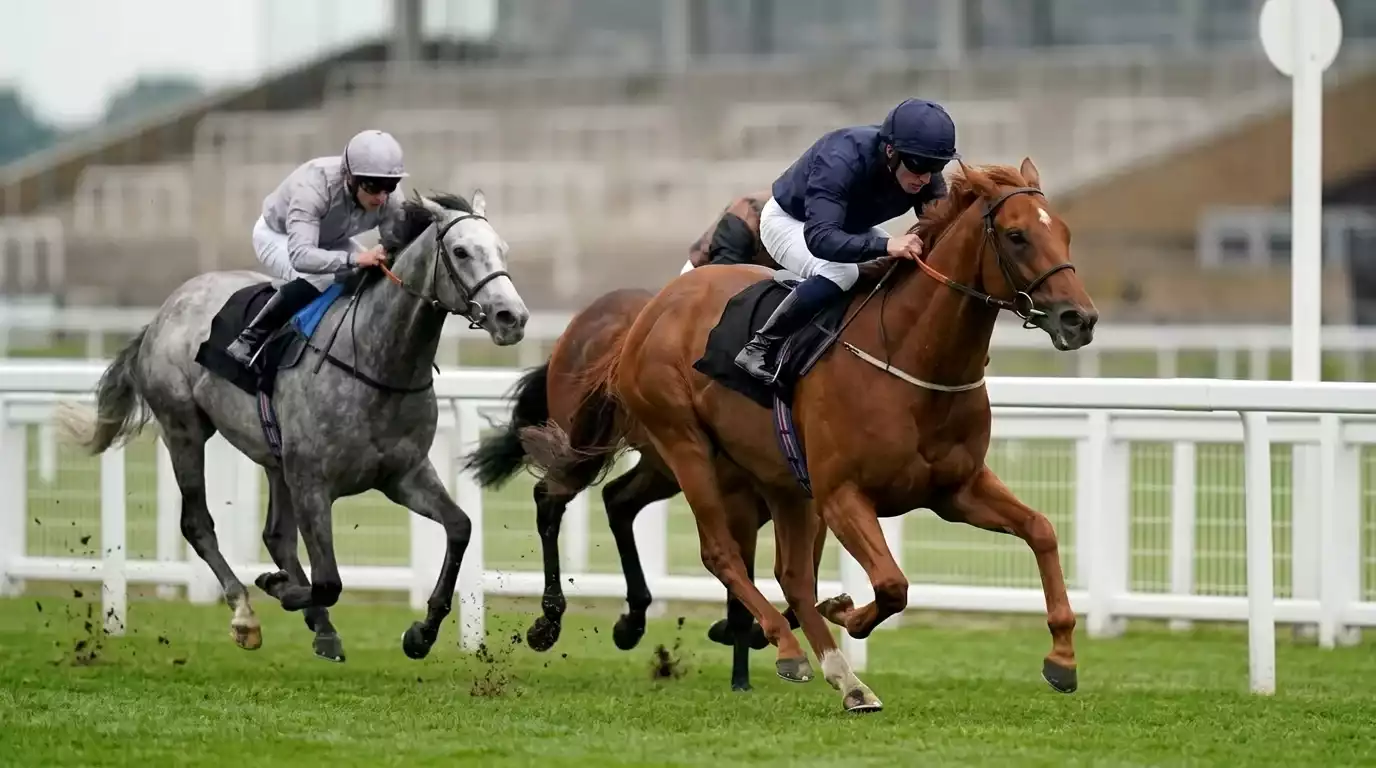
Place terms — the combined rules that decide how many positions a bookmaker will pay out on, and what fraction of the win odds is applied to those positions. A 14-runner non-handicap with terms of "1/5 odds, 3 places" pays a third-placed horse at one fifth of its starting price.
The standard framework under the Rules of Racing, mirrored by every UKGC-licensed bookmaker, is this. Two to four runners: win only — no place market. Five to seven runners: a quarter of the odds for the first two finishers. Eight or more runners in a non-handicap: a fifth for the first three. Eight to fifteen runners in a handicap: same — a fifth for three places. Sixteen or more runners in a handicap: a quarter of the odds for four places. Those bands hold from a wet Tuesday at Catterick to Gold Cup day at Cheltenham.
Where it gets interesting is what "favourite" really means in that grid. Keith Melrose, the senior racing analyst at Racing Post, has put it as bluntly as anyone in this game when he describes the short-priced favourite as "the punting equivalent of a slow puncture" — fine when you cash, but a long-run leak when you do not. The place market is where that observation bites. A 6/4 favourite to win is a 1/4-fraction proposition to place under standard terms, which means your maths needs to clear a hurdle that the average bet slip never bothers to draw.
I will pull that hurdle apart in the next section, because most of the place-versus-each-way confusion in British racing flows directly from it. The field-size bands and their fractions are the architecture; the maths of which bet to use, and when, is what you build on top of them.
Place-Only Versus Each-Way: The Two Bets That Are Not the Same
Stand in front of any UK bookmaker shop window on Grand National morning and listen for ninety seconds. You will hear the same phrase from at least three different punters: "tenner each-way on number twelve." Roughly three quarters of all Grand National bets — about 74 to 75 percent by industry estimates — go on in exactly that form. Almost nobody asks for a place-only single. There is a reason for that habit, and there is also a reason it is often the wrong habit.
An each-way bet is two stakes. One on the horse to win at the full advertised price. One on the horse to place, settled at the bookmaker's stated fraction of those win odds, with that fraction usually being 1/4 or 1/5. So a £10 each-way bet is actually £20 going through the till. A place-only single is a single £10 stake on the same horse to place, and only to place. The win leg is not there. The total liability is half.
The structural difference between the two bets
| Feature | Each-way bet | Place-only single |
|---|---|---|
| Number of stakes | Two (win + place) | One (place only) |
| Total cash through the till | 2 × unit stake | 1 × unit stake |
| Outcome if horse wins | Both legs pay | Place leg pays only |
| Outcome if horse places (not wins) | Place leg pays, win leg loses | Place leg pays |
| Outcome if horse finishes outside places | Both legs lose | Single stake lost |
| Availability in UK retail | Universal | Restricted to selected operators |
Now apply that structure to a real price band. The maths is what separates a thoughtful punter from a one-bet-fits-all punter.
Worked comparison: £20 stake on a horse at 4/1 in a 12-runner non-handicap (1/5 odds, 3 places)
Each-way £10 win + £10 place: if the horse wins, the win leg returns £10 × 4 + £10 stake = £50, and the place leg returns £10 × (4/5) + £10 stake = £18. Total return £68. If the horse only places, win leg loses £10, place leg returns £18. Net result: minus £2.
Place-only £20: if the horse wins, returns £20 × (4/5) + £20 stake = £36. If the horse only places, returns £36. If neither, you lose £20 instead of the £20 split across two outcomes.
Reading the result: the each-way punter only nets profit on a place finish if the horse is priced long enough that the place fraction covers the lost win stake. At 4/1 with a 1/5 fraction, the place leg returns £8 of profit on a £10 place stake — not enough to cover the lost £10 win stake. The place finish is a net loss on each-way at these terms.
This is the "double stake at short prices" trap. At a price below roughly 5/1 with 1/5 odds place terms, an each-way bet that lands only as a place finishes underwater. Above that threshold, the each-way mechanic begins to make structural sense again — which is why Grand National punters, who reach for 25/1 and 40/1 outsiders, almost always strike each-way.
I have written a full break-even derivation, with every fraction-and-field combination tabled out, in my piece on each-way versus place-only in UK racing. For the rest of this guide, hold this single lesson in your head: a place-only single is a smaller, more honest bet that only wins on a place; an each-way is two bets, and the cheaper-looking one is only really cheaper at long odds.
How Place Terms Are Set: Field Size, Race Type, and the Rules That Hold
There is a moment at every televised meeting where the ITV racing presenter taps the screen and says "now into the each-way prices" — and somewhere in the country a first-time punter wonders why the screen suddenly shows different small print on a 16-runner Cambridgeshire than it did on the 6-runner novice chase before it. The answer is field size. The whole architecture of the British place market is built on a single principle: the more horses go to post, the more positions get paid, and at a wider fraction.
The standard grid every UKGC-licensed bookmaker is required to publish before declarations close looks like this.
Standard place terms by field size and race type in UK racing
| Runners | Race type | Places paid | Place fraction |
|---|---|---|---|
| 2 to 4 | All races | Win only | No place market |
| 5 to 7 | All races | 2 | 1/4 odds |
| 8 or more | Non-handicap | 3 | 1/5 odds |
| 8 to 15 | Handicap | 3 | 1/5 odds |
| 16 or more | Handicap | 4 | 1/4 odds |
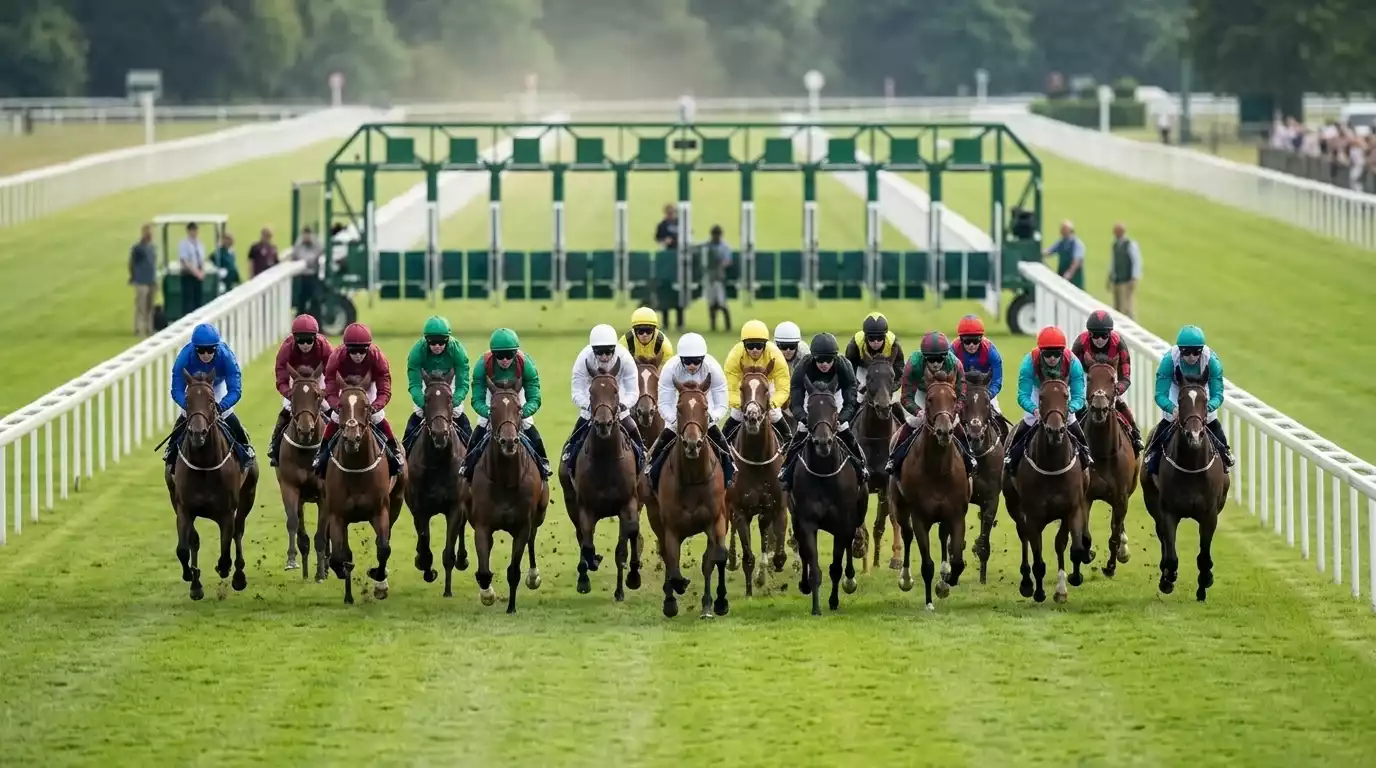
That last line is where the big-field handicap punter lives. The shift to a quarter-odds fraction on four places, the moment runners cross sixteen, is the single biggest structural change in British place betting — and it is the reason the Wokingham, the Ebor, the Cambridgeshire, the Stewards' Cup, and Lincoln Handicap day Friday afternoons attract such concentrated each-way action. The book is paying you more, on more horses, at a friendlier fraction.
Why Handicaps and Non-Handicaps Diverge
Handicaps and non-handicaps split at the 16-runner mark because handicaps are explicitly designed to bunch the field. The Handicapper weights horses so that, in theory, they finish in a line. That bunching raises the probability that any single horse will be in the first four, which is why bookmakers can afford to extend a fourth place and tighten the fraction simultaneously. In a non-handicap with sixteen-plus runners — and these do exist, occasionally, in big-field maidens or sales races — the favourite is genuinely fancied, and the bookmaker is not in a hurry to give away a fourth place.
Enhanced Terms on Festival Races
On a handful of marquee races each season — chiefly at the Grand National meeting, the Cheltenham Festival, Royal Ascot, the Ebor, the Stewards' Cup, and the Lincoln — UK bookmakers commonly pay enhanced place terms: five, six, seven, sometimes eight places. These are not regulatory changes. They are commercial sweeteners, and they are why the each-way multiple becomes the queen bet of festival week. The book is voluntarily extending the paid positions, knowing the cost will be more than offset by the volume of casual money the offer attracts.
The Cambridgeshire and the Grand National have historically been the two races where the difference between standard 1/5 three-place terms and enhanced 1/4 six-place terms is the gap between a bet that breaks even and one that is genuinely value. Both routinely see seven to eight places paid by mid-market UKGC-licensed books on the day.
That is the architectural overview. The detail — withdrawn horses dropping the field below the threshold, non-handicap rules on a card that also runs a handicap, and bookmakers occasionally publishing wider terms before declarations — sits in my full breakdown of place terms by field size.
The Maths of the Place Fraction: What 1/4 and 1/5 Really Cost You
I once watched a man at York hand over a £50 each-way slip on a 9/2 favourite in a 9-runner Group Three and announce, to anyone listening, that he had "five hundred quid coming if it places." He had not. He had £140 coming if it placed, and the rest of the room was too polite to correct him. That single moment — the gap between what a fractional place return looks like in someone's head and what it actually is in the till — is the single most useful thing this guide can fix.
The formula is short. Place return = stake × win odds × place fraction, plus stake back. Three values multiplied, one added.
The place return formula in plain British English
Return = (Stake × Win Odds × Place Fraction) + Stake
Where the place fraction is 1/4 (= 0.25) or 1/5 (= 0.20) depending on the race grid. The fraction is applied to the win odds, not to the stake. The stake itself comes back on top, because a winning bet always returns its own stake plus profit.
Let me walk three prices, three field sizes, the same £20 stake. These are the calculations I would do in my head at the bar.
£20 place-only on a 4/1 horse in an 8-runner non-handicap (1/5 odds, 3 places)
Place fraction of the price: 4/1 × 1/5 = 4/5 = 0.8
Profit if it places: £20 × 0.8 = £16
Total return: £36 (£16 profit + £20 stake back)
£20 place-only on a 9/2 horse in a 12-runner non-handicap (1/5 odds, 3 places)
Place fraction of the price: 9/2 × 1/5 = 9/10 = 0.9
Profit if it places: £20 × 0.9 = £18
Total return: £38
£20 place-only on a 16/1 horse in a 22-runner handicap (1/4 odds, 4 places)
Place fraction of the price: 16/1 × 1/4 = 4/1
Profit if it places: £20 × 4 = £80
Total return: £100
Three things should jump out from that grid. First, the fraction multiplies through the price — it does not subtract. A 9/2 horse at a 1/5 fraction pays a 9/10 price on the place, not "9/2 minus a fifth." Second, the bigger fields with 1/4 fractions are where the real numerical headroom lives. The same £20 stake returns £16 profit on a short non-handicap and £80 profit on a long-priced runner in a big-field handicap. Third, the win price is doing the heaviest lifting. Place betting on short-priced favourites is a slow leak — the punting equivalent of a slow puncture — because the multiplier shrinks the price into spare change.
The cleanest summary I have heard of the trade-off ran in a Sunday Racing Post column: long enough in the win odds, and the place fraction is a fair contract; short enough in the win odds, and the fraction punishes you twice — once on the multiplier, once on the implied strike rate the bookmaker is pricing in. Run the maths for yourself before any seven-figure dream slips up in your head and turns into a hundred and forty quid.
PlaceLedger tool
The Place-Leg Ledger
Price a place leg the way a book does. Enter the win odds and the field, and the ledger returns the terms in force, the model's fair place price, and how much margin the fraction quietly adds on top of the win market.
5.50 decimal · 18.2% raw implied
- Place price on the slip1.90 (9/10)
- Model chance of placing43.4%
- Model fair place price2.30
Margin carried by the place leg
21.2%
Win market 14.4% · the fraction adds 6.8 points on top
Three structures, same £20
-
Win-only single−£2.52
Returns £110.00 if it wins · expected value −12.6%
-
Place-only single−£3.50
Returns £38.00 if it places · expected value −17.5%
-
Each-way, £10 + £10−£3.01
£74.00 if it wins, £19.00 if it only places · expected value −15.0%
What each extra place is worth
-
3 places (terms in force)−17.5%
-
4 places+4.7%
-
5 places+24.2%
-
6 places+41.1%
At 9/2 in a 12-runner non-handicap the fraction, not the horse, is doing the damage: the place leg carries 6.8 points more margin than the win market it is priced from. Of the three structures the win-only single is the least expensive and the place-only single the most. One extra paid place at the same fraction moves the place leg from −17.5% to +4.7%.
Method: the displayed win price is de-vigged using an overround estimated from field size, then the chance of finishing in each position is derived with a Harville-style order model that treats the remaining runners as evenly matched. Races with a dominant favourite or an exposed outsider will read differently from the model. Estimates only, not a forecast, not advice. 18+ · UKGC-licensed operators only · GamCare.
The Scale of the British Racing Market: Where Place Money Actually Sits
Whenever I get asked at a friend's wedding whether horse racing is "dying," I do the same thing: pull up two numbers on my phone and pass it across the table. The numbers, year on year, refuse to agree with the obituary. UK gambling generated £16.8 billion in Gross Gambling Yield in the year to March 2025, and the remote sector — the online channel where the vast majority of place bets are now struck — keeps growing.
£16.8 bn
UK Gross Gambling Yield, April 2024 to March 2025, up 7.3% year on year
£766.7 m
Remote betting GGY generated by horse racing alone — second only to football's £1.3 bn
+8% YoY
Online remote GGY growth in Q2 2025, reaching £1.42 bn for the quarter
24.4 m
Active remote casino, betting and bingo accounts as of Q1 2025

The 7.3% uplift on the headline figure tells you what is happening underneath. Jason Davies, the Data Analytics Manager at the Gambling Commission, framed it neatly in his blog accompanying the 2024-25 release: the rise has largely been driven by GGY from online gambling, which is up by more than £900 million in a single year. Online remote betting alone produced £2.6 billion in GGY across the same period — and within that, horse racing punters generated £766.7 million.
If you are wondering where place bets fit in that £766.7 million figure, the honest answer is that the UKGC does not disaggregate the place market out of the racing total. Place stakes are folded inside the broader "remote betting on horse racing" line. But every operator I have spoken to in this industry confirms the same pattern: each-way and place-only bets account for a disproportionately large share of recreational horse racing turnover, because they are the natural fit for the casual punter who wants two ways to win.
"Britain's gambling industry generated £16.8 billion in Gross Gambling Yield in the year to March 2025, which represents an increase of 7.3 percent since last year. This rise has largely been driven by GGY generated from online gambling which has gone up by more than £900 million." — Jason Davies, Data Analytics Manager at the Gambling Commission, framing the 2024-25 Industry Statistics release.
The other proportion that matters is how the on-course and online sides split. The number of licensed betting premises in Britain dropped to 5,931 in the 2024-25 reporting period — the tenth consecutive period of decline, and 1,808 fewer shops than before the pandemic, a 17.8% fall. The high-street retreat is real. But racecourse attendance climbed back above five million in 2025, the first time it has cleared that mark since 2019. The shape of the place market in 2026 is therefore an online market with an on-course conscience: most money flows through phones, but the cultural anchor still runs at Aintree, Cheltenham, Ascot, York, and the half-dozen other meetings where Britain still turns out in person.
How British Festivals Reshape the Place Market
Mid-March I get more texts than I do birthday cards. The same names every year — old colleagues, family members who do not bet outside of Cheltenham, a brother-in-law who only ever asks the same question: "what should I have each-way?" The week of the Cheltenham Festival, followed by the Aintree Grand National meeting in April, then Royal Ascot in June and the Ebor in August, defines the British place-betting calendar.
The numbers prove it. Every one of the 28 races at the 2025 Cheltenham Festival finished inside the top 31 races of the entire National Hunt season by betting turnover — an unprecedented concentration of market activity into four days. The Grand National itself attracts more than seven times as many bets as the Cheltenham Gold Cup, the next most-bet race in the British calendar. Around 17% of the adult UK population places a bet on the National every year. Aintree's three-day meeting in April routinely sees more than £250 million staked across the card, with over £200 million of that landing on the National alone.
The Grand National receives 700% more bets than the Cheltenham Gold Cup, the runner-up. The second-most-bet race in Britain attracts roughly one seventh of the turnover of the most-bet. There is no other race in the racing world with this kind of dominance over a national betting audience.
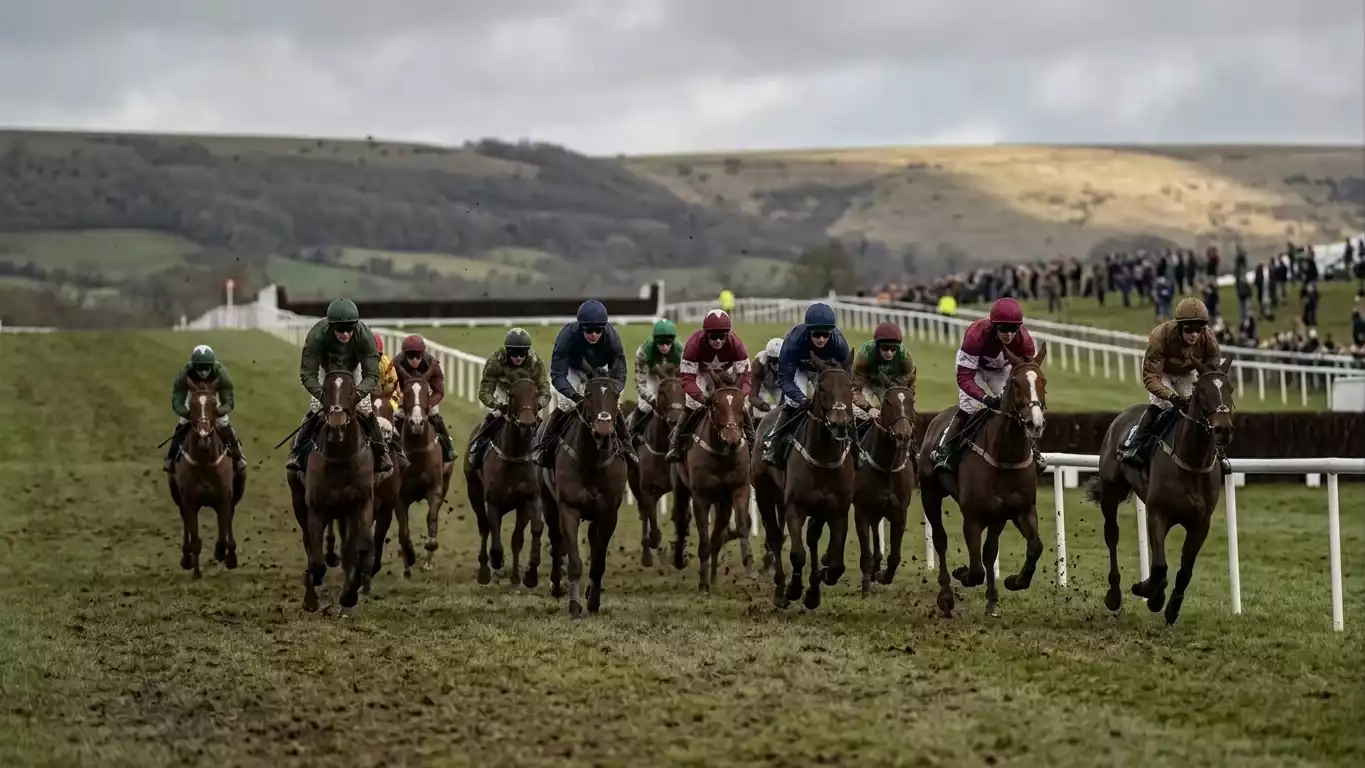
The festival effect on place markets is twofold. First, the field sizes balloon. The Grand National runs 34 to 40 horses; Cheltenham's big handicaps fill 18 to 28; Royal Ascot's Royal Hunt Cup and Wokingham routinely max out at 30 declared runners. Big fields trigger the 16-plus handicap rule automatically — four places paid, 1/4 odds fraction — and that alone shifts the maths in the punter's favour before any extra-place offer kicks in.
Second, the commercial pressure between operators flips the place market wide open. Most UKGC-licensed bookmakers compete on enhanced terms for marquee races: five, six, seven, and on the National itself often eight paid places. None of these enhancements are mandated. They are a price war for the £250 million pile, and it costs the bookmaker every time a sixth-placed horse cashes.
The discipline is to stop reaching for "Gold Cup each-way at three places" out of habit. Enhanced terms exist at the festival, the bookmakers publish them in the week leading up, and waiting twelve hours to compare a four-place to a six-place offer is the single highest-margin decision a recreational punter will ever make. Cheltenham itself, despite a 218,839-strong four-day crowd in 2025 — the lowest attendance in a decade outside the 2021 closed-doors year — still drove higher betting turnover per race than every other meeting on the calendar combined.
For a granular tour through each festival's place market behaviour, see my full piece on place betting at UK racing festivals.
The Promotions That Move the Place Market: BOG, Extra Places, NRNB
A question I get every Cheltenham week from younger punters: "Why are you holding accounts at four different books? Isn't one enough?" The short answer is no — never on a festival morning, never on a 16-plus runner handicap, never when the difference between operators on a single race can be three or four percentage points of expected value. The British market is mature and competitive, and that shows up as three structural promotions every place punter needs to recognise on sight: Best Odds Guaranteed, Extra Places, and Non-Runner No Bet.
Best Odds Guaranteed — known across the industry as BOG — is the contract under which a bookmaker promises that if your horse drifts in price between the moment you struck the bet and the SP, you will be settled at the higher price. It is a free option on the market drifting. Extra Places is the festival sweetener: five, six, seven, or eight paid positions in place of the standard three or four. Non-Runner No Bet — NRNB — is the ante-post lifeline: if the horse you backed weeks before the race fails to come under starter's orders, your stake is refunded rather than walking out the door.
How the three core place-market promotions interact with the bet you place
| Promotion | What it does | When it triggers | Typical scope |
|---|---|---|---|
| Best Odds Guaranteed | Pays you the higher of your taken price or the SP | Both legs of an each-way usually qualify | Most UK racing, exclusions on early prices or boosts |
| Extra Places | Pays more places than the standard field-size grid | On specified races, usually festivals and big handicaps | 5 to 8 places depending on operator and event |
| Non-Runner No Bet | Refunds stake if horse does not run | Mostly on ante-post markets for marquee races | Activated by the bookmaker per event, not universal |
Industry testing of mainstream operators — the kind of comparative work that price-shopping aggregators do on a continuous basis — consistently finds that holding accounts with two or three UK books and routinely shopping for the best price on a given race generates two to five percent better returns over a sustained period. That is not a typo. Two to five percent on every settled bet, compounding through a season. That is the difference between a profitable season and a breakeven one.
✓ Worth doing on every festival bet
- Compare two or three UK books for places paid before striking — the gap between four and six places is real money
- Strike early prices in the morning when BOG is alive and the market is still feeling its way
- Check for NRNB on ante-post strikes before the final declaration date
- Settle each-way bets in your head before laying them, not after
✗ Not worth doing
- Chasing welcome offers as a long-term price strategy — they pay once
- Holding one account out of loyalty when the market is moving against you
- Taking a sixth or seventh place enhancement at the cost of a much shorter base price
- Striking at SP on a marquee race when better than SP is available all morning
The decision rule is straightforward. Promotions are mathematically attractive when they widen the strike rate at which your bet breaks even, and mathematically marginal when they only enhance an already-fancied position. Use the festivals to compress them all at once.
What the 2026 Regulatory Reset Means for the Place Punter
The morning after the Autumn Budget in November 2025, I had two phone calls before breakfast. The first from a trainer asking if his yard was about to lose half its prize money. The second from a recreational punter asking if his place bets would still pay the same. Both questions had genuine substance, and both answers turned out to be more nuanced than the press coverage had let on.
Three changes matter most. First: Remote Gaming Duty, the levy on online casino, has been raised from 21% to 40% effective 1 April 2026. Second: General Betting Duty, which applies to fixed-odds sports and racing betting, will rise from 15% to 25% from April 2027 — but horse racing has been explicitly excluded from this General Betting Duty rise. Third: the Gambling Commission's "light-touch" financial vulnerability check threshold, originally set at £500 net deposits over a rolling 30-day period in August 2024, has been lowered to £150 in net deposits, in force since February 2025.
The horse-racing carve-out from the GBD rise is the single most important structural shield the British place market has had in a decade. It signals that the Treasury accepts the argument that taxing racing at the same rate as remote casino would push the sport into operational deficit, threaten levy contributions, and undermine the funding chain. Anne Lambert, Interim Chair of the Horserace Betting Levy Board, framed the underlying tension in the 2024-25 HBLB annual report: bookmakers' increased profits are being generated from falling turnover, which forces the levy board to exercise appropriate prudence in expenditure decisions and maintain sufficient reserves. The Horserace Betting Levy itself hit £108.9 million for 2024-25, a record since the 2017 reform, up from £105.3 million the year before — but turnover per race fell 8% over the same window.

Three regulatory changes a UK place punter feels in 2026
Online deposits: a rolling 30-day net deposit total above £150 may trigger a light-touch financial vulnerability check. The Gambling Commission expects less than 3% of active accounts to face these checks, and 97% of those to be resolved frictionlessly using public data. Roughly 1 in every 1,000 active accounts is expected to face a check with any meaningful friction.
Casino versus racing balance: with RGD jumping to 40% but horse racing GBD held steady, the relative pricing of racing promotions versus casino promotions tilts in racing's favour from April 2026.
Levy yield record: £108.9 million in 2024-25, funding prize money and integrity, despite a falling per-race turnover trend.
Tim Miller, Executive Director of Research and Policy at the Gambling Commission, was unusually candid at the Ethical Gambling Forum in April 2026. He pointed out that in 2026 it cannot be right that some operators still ask consumers to share bank statements and other financial documentation — calling that approach outdated, inconsistent, and disproportionate. The £150 threshold is designed to operate as a soft data check, not a paperwork demand, and the Commission's own modelling expects the overwhelming majority of triggered checks to resolve invisibly.
For a deeper walk through every line of the Autumn Budget 2025 reset — duty changes, levy mechanics, risk-check operations and the GBD exemption argument — see my piece on UK place betting under the 2026 regulatory reset.
The Offshore Trap: Why "Better Place Terms" Off the UKGC Register Are a Lie
A reader emailed me last summer with a screenshot. It showed a site offering ten paid places on the Grand National. Ten. Not eight, not seven — ten. He wanted to know why he should not just deposit and have a punt. The site was not on the UK Gambling Commission's register. The site was, in industry shorthand, illegal. And his question is the single most dangerous question a place punter can ask themselves in 2026, because the answers offshore operators offer are designed precisely to look more generous than the regulated alternative.
The scale of the problem is bigger than most punters realise. Unlicensed operators controlled an estimated 9% of the UK's online gambling market in the first half of 2025, generating £379 million in GGY in those six months alone. In 2020 the black-market share was 0.43%. That is more than a twentyfold increase in five years. About £10 million — roughly 5% of the entire Grand National 2025 betting handle — was staked through offshore, unlicensed sites by UK consumers who almost certainly thought they were getting a marginally better deal.
Ismail Vali, the founder of Yield Sec and now President of Gaming Compliance International, has been the most consistent industry voice on this question — and his framing in a Racing Post interview in September 2025 cut straight to the bone. For mainstream consumers, he asked, what possible benefit would you actually gain from using an illegal gambling operator in Great Britain? Illegals in Great Britain cannot beat legals across price, product, or promotion, consistently. There is no good reason for a mainstream consumer to use an illegal gambling operator.
"Illegal online gambling in Great Britain is now knocking on the door of 10% market share and it has achieved this through targeted exploitation of vulnerable audiences." — Ismail Vali, President of Gaming Compliance International and founder of Yield Sec, on the 2026 industry trajectory.
What does the offshore "better deal" actually buy a punter? On the surface, larger extra-place enhancements, higher welcome offers, no deposit checks, no affordability friction. Underneath, four real costs. No regulatory recourse if the bet is voided or settled wrongly. No deposit protection if the operator goes dark — your funds simply vanish. No data protection under UK GDPR enforcement that holds water. And no working relationship with UK banking infrastructure, which means slow withdrawals, blocked payments, and accounts that frequently disappear in the middle of a settled bet.
The verification step is two minutes of work. Every UKGC-licensed operator publishes its licence number on its homepage, and the Commission's public register is searchable by name or number. If the site you are about to deposit to is not on that register, it is not licensed to take your bet — regardless of what its homepage banner claims. Two minutes of looking up a licence number is the cheapest piece of due diligence in this entire industry.
The Pre-Bet Checklist: What I Run Through Before Every Place Strike
There is a five-step routine I have used for the last six or seven years, written originally on the back of a Racing Post on a Cheltenham Wednesday, that fits onto a phone screen and takes about ninety seconds to run. It does not pick winners. It picks settled bets that I can defend — to myself, to the maths, and to the bankroll. Most losing place bets in British racing fail not because the horse was wrong but because the punter skipped one of these five questions before tapping "place bet".
The five questions to run before any UK place strike
- Field size at declaration time. Is the race actually paying the number of places I think it is? Eight runners on the morning may be seven by the off if a non-runner appears. Seven places means 1/4 odds and two paid — a fundamentally different bet than the three-place 1/5 fraction I planned.
- Race type — handicap or non-handicap? The 16-plus quarter-odds four-place rule only applies to handicaps. A maiden or stakes race with 18 runners still pays three places at 1/5, not four at 1/4.
- Fraction matches the field band. Confirm visually on the slip: the fraction listed (1/4 or 1/5) matches the band I expected. Operators occasionally publish enhanced terms with non-standard fractions that look generous on places paid but tighten the fraction.
- Promo eligibility. Does Best Odds Guaranteed apply to both legs of any each-way I am about to strike, or has the operator excluded a price boost from BOG? Is this race in the day's extra-place window? Is the welcome offer's wagering still active in a way that might void the bet?
- Stake against bankroll. Is this stake within the unit-size discipline I set for myself at the start of the month? Place bets erode bankrolls quietly because every losing slip looks small in isolation. The damage is cumulative, not single-bet.
The other question worth asking, on certain races and certain meetings, is whether the bet should go in a Tote pool rather than at fixed odds. The Tote — operating under the Britbet brand on most British racecourses — runs pari-mutuel pools where dividends are calculated after the race from the total money staked, not against advertised place odds. On big-field handicaps with a long-priced winner, the Tote place dividend has historically outperformed standard fixed-odds returns by a noticeable margin. The full mechanics — placepot, quadpot, on-course access, and the dividend maths — sit in my dedicated guide to Tote and Britbet place pools in UK racing.
Place Bets in UK Racing: Reader Questions Answered
What does "bet to place" mean in UK horse racing?
"To place" in UK racing means a single fixed-odds bet that your horse will finish inside the paid positions for that race. It is distinct from "to win," which requires the horse to finish first, and from "each-way," which is two bets — one to win and one to place — bundled on one slip. The number of paid positions and the odds fraction are set by the bookmaker according to the field size and race type, following the standard British framework that all UKGC-licensed operators publish before declarations close.
How many places does a place bet pay in a UK race?
The standard structure is built around field size and race type. Two to four runners: win-only with no place market. Five to seven runners: two places at one quarter of the odds. Eight or more runners in a non-handicap: three places at one fifth. Eight to fifteen in a handicap: three places at one fifth. Sixteen or more in a handicap: four places at one quarter — the most generous standard band. On marquee races at Cheltenham, Aintree, Royal Ascot, the Ebor and other big-field meetings, bookmakers commonly enhance terms to five, six, seven, or even eight paid places.
What is the difference between a place bet and an each-way bet?
A place bet is a single stake that wins only if the horse finishes in a paid position. An each-way bet is two separate stakes glued together: one on the horse to win at the full price, one on the horse to place at the fractional odds. A £10 each-way is £20 going through the till. A £10 place-only single is £10. If the horse places but does not win, the each-way bet loses the win leg and collects on the place leg only, while a place-only single simply collects. The choice depends almost entirely on the win odds: longer prices make each-way structurally attractive, shorter prices make place-only the more disciplined choice.
Are place bets paid at full odds or a fraction?
Place bets are always paid at a fraction of the advertised win odds, never the full price. The fraction is fixed by the race grid — one quarter for the smaller and largest fields, one fifth for the middle band. The fraction multiplies through the win odds: a 5/1 horse at a 1/5 fraction pays a 1/1 (evens) price on the place, returning £1 of profit for every £1 staked. A 12/1 horse at a 1/4 fraction pays a 3/1 price on the place. The fraction is the single most under-read element of any UK bet slip.
Which UK bookmakers allow place-only single bets?
Place-only single bets are not universally available across UKGC-licensed operators. The major British books, including the largest high-street brands and most established online operators, do offer place-only singles on UK racing — but availability varies. Tote pool betting, operating as Britbet on most British racecourses, has always supported place-only stakes by design. Smaller online operators and some exchange-style platforms restrict their place market to the place leg of an each-way bet rather than allowing a standalone single. The simplest test is to check whether the bet slip presents "to place" as an option separate from "each-way" — if it does, place-only singles are available.
How are place terms decided by bookmakers?
Place terms in UK racing are set against a standardised framework that all licensed bookmakers publish before declarations are finalised. The framework defines, for each combination of field size and race type, the minimum number of paid positions and the maximum odds fraction the bookmaker will apply. Individual operators can choose to publish enhanced terms above this baseline, paying more places or a wider fraction on selected races, particularly at festivals and on big-field handicaps. Terms become fixed for any settled bet at the moment the field is officially declared — non-runners that drop the field below a threshold can reset terms for bets placed on the day, depending on the operator's stated policy.
Where to Take This Reading Next
From overview to operational detail
If you have read this far, you now hold the architecture of UK place betting in your head: the field-size bands that decide places and fractions, the structural difference between place-only and each-way, the maths that tells you which fits which price, the festivals that bend the standard terms, the promotions that shape settled returns, and the regulatory shifts coming into force across 2026 and 2027. Everything else in British place betting is an application of these five elements to a specific race, a specific meeting, a specific bet slip in front of you.
The place market in 2026 sits in a unique window. The horse-racing carve-out from the General Betting Duty rise has shielded the sport from the structural pricing shock that online casino is about to absorb. The £150 financial vulnerability check is in force, but designed to resolve frictionlessly for the vast majority of accounts. Festival turnover is concentrating, with every Cheltenham race landing inside the top 31 of an entire National Hunt season. And the offshore black market has grown into a 9% share of online gambling that promises better terms it cannot deliver.
The discipline I have spent eight years arguing for, on Sunday columns and over post-racing pints, comes down to a single sentence. Know what bet you are placing before you place it, know the maths it is built on before the race goes off, and know which operator is settling it under whose rules before you ever press deposit. The British place market rewards punters who pay attention to all three.
Related posts
In-Play Place Market Mechanics: How Live Pricing Actually Works During a Race
UK Betting Taxation: How the Punter’s Tax-Free Status Actually Works