
Dead-Heat Rules on UK Place Bets
 Available in US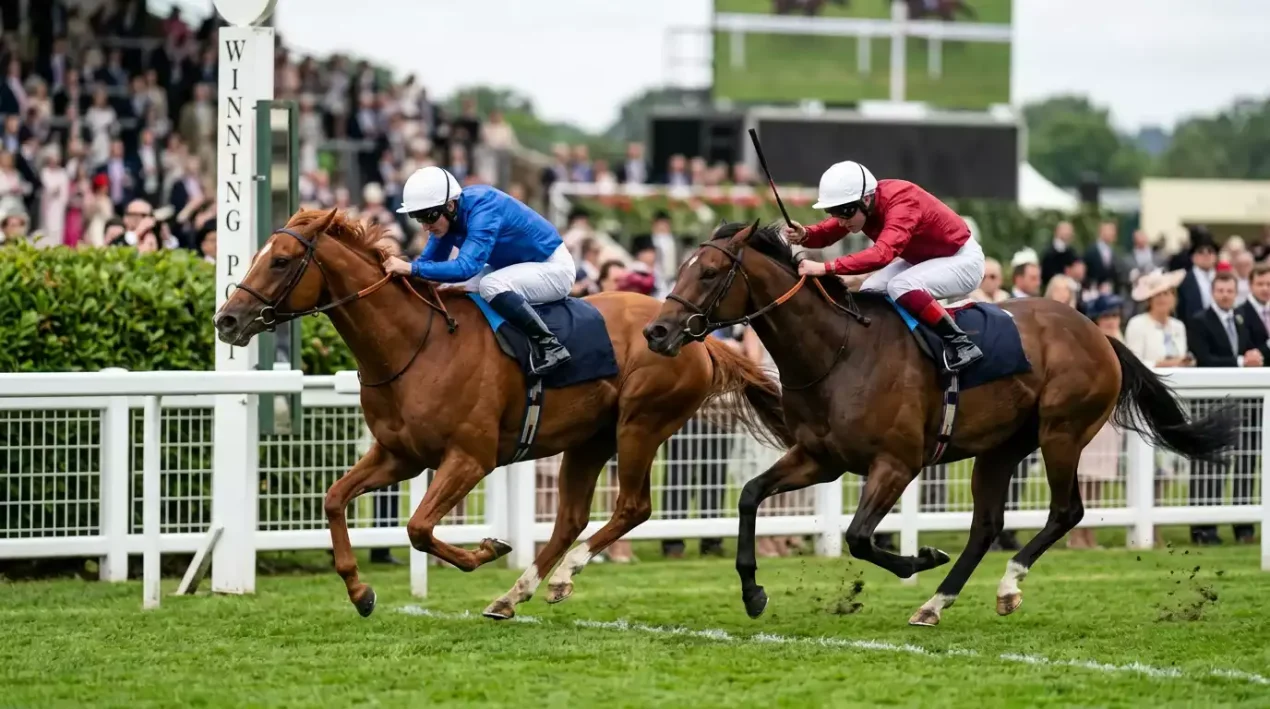
Settlement Procedures: Applying Reductions on Fixed-Odds and Exchanges
February 2022, all-weather card at Lingfield, eighth race. My horse goes off 7/2 each-way and runs a perfect race — held up, swung wide on the bend, finished like a train. The photograph went up. Two horses inseparable for third. I waited at the bar fully expecting £30 back. The settled amount? £15. Half the place return. I knew about dead-heat rules in principle but seeing the figure on the screen brought home what most punters never quite internalise — the dividing-by-two is brutal, and the bookmaker is not being unfair, it is exactly what every settlement rulebook in the UK has stipulated since the photo-finish camera arrived.
Dead-heats are unusual but not rare. Photo-finish technology resolves the vast majority of close finishes, but where the resolution is genuinely tied to the pixel — and it does happen, maybe two or three times a month across British racing — settlement rules kick in. The same rules apply across fixed-odds, exchange and Tote pool markets, with minor mechanical differences in how the reduction is calculated.
If you bet each-way or place-only with any regularity, understanding how dead-heat reductions are applied is part of the basic toolkit. The maths is simple. The implications for staking and bet selection are less obvious.
The two divisions: stake division and reduction in payout
UK dead-heat rules work on stake division. When two horses dead-heat for a qualifying place, half your stake is treated as if it placed and the other half is treated as if it lost. The placed half pays out at full odds. The lost half returns nothing.
Worked example. £10 each-way at 8/1 with 1/4 odds for the place. Win element loses, place element runs into a dead-heat for third. Place odds were 2/1 (8/1 divided by 4). Full settlement would have returned £30 (£10 at 2/1 plus stake). Dead-heat settlement: £5 of your £10 place stake is treated as placed and pays out at 2/1, returning £15. The other £5 returns nothing. You collect £15 — half what a clean place finish would have produced.
The same logic scales for three-way dead-heats. Three horses dead-heat for a placed position, your stake is divided by three. One-third of your stake pays out at full odds, two-thirds lose. Four-way dead-heats — vanishingly rare but mathematically possible — divide by four. The rule is “divide by the number of horses tied for the place.”
This is technically a reduction in stake rather than a reduction in odds. Your odds stay the same. It is your effective staked amount that shrinks. The distinction matters because exchange settlement and some bookmaker calculators present the maths differently, but the net result is identical — half money on a two-way dead-heat, third money on a three-way, and so on.
For multiple-place bets — Tote place pools and the placepot — dead-heat rules apply to ticket counts rather than to individual stakes. A dead-heat for a placed position simply adds another set of winning tickets to the pool, which dilutes the dividend per £1 unit. The maths is built into the pool calculation automatically. You don’t need to do anything except notice that your dividend looks lower than projection suggested.
Where dead-heats actually happen and why
Dead-heats cluster in specific race types and conditions. Recognising the pattern is part of understanding your real exposure to the rule.
Big-field handicaps over middle distances. The mid-pack contest for third or fourth place is where most dead-heats occur. Two or three horses finishing together with similar momentum, similar stamina reserves, and similar tactical positions is far more common than the equivalent in win-only finishes. Win-line dead-heats happen but they make headlines. Place dead-heats happen quietly and only the punters with each-way tickets notice.
All-weather sprints with full fields. Tight tracks, fast surfaces, horses bunched in the closing stages. Lingfield, Wolverhampton and Southwell all-weather sprints account for a disproportionate share of UK dead-heats. The geometry of the run-in combined with surface uniformity produces these finishes more often than turf racing does.
Apprentice handicaps. Less experienced jockeys, more variable tactics, weaker overall riding quality at the back end of the race. Horses finishing together because nobody got the timing exactly right is a common outcome.
Long-distance staying races where the pace collapses. The opposite of the all-weather sprint scenario but produces the same outcome — horses arriving together because the race has fallen apart and the contest is for places at a slower tempo.
The four-place handicap at sixteen-plus runners is statistically the worst exposure to dead-heat reduction because there are simply more placed positions to dead-heat into. Three places paying is less exposed. Two places paying — the small-field structure — is the least exposed of all because dead-heats for first and second are dramatic enough that the photo-finish almost always splits them.
How exchange markets handle dead-heat rules differently
Betting exchanges apply dead-heat reduction the same way as fixed-odds — divide your stake by the number of horses tied for the place — but the visible mechanic looks different because exchange P&L is calculated in real-time and updates the moment settlement is published.
If you backed a horse to place at 4.0 on the exchange and it dead-heats with one other runner for the qualifying place, your matched bet is settled as half-win and half-loss. Your back stake on the placed portion returns winnings at the matched odds. The unplaced portion returns nothing. The exchange dashboard simply shows a final settled figure that is half of what a clean place would have paid.
Where it gets more interesting is on the lay side. If you laid a horse to place at 4.0 and it dead-heats for a place, you owe half the liability you would have owed on a clean place finish. The reduction works in your favour as the layer in exactly the way it works against you as the backer. This symmetry is sometimes useful for advanced punters who run market-makers or arbitrage positions across exchange and fixed-odds — dead-heat exposure is identical on both sides of the trade, so the rule does not create directional bias.
One quirk worth noting. Some exchanges historically settled close finishes that were technically separated by inches as dead-heats anyway, on a “deemed-tied” basis when the gap was below a published threshold. This practice has largely disappeared from regulated UK exchange markets. Settlement now follows the official race result published by the racecourse stewards, which is binary — either the horses are tied or one is ahead. The photo-finish camera and the stewards’ adjudication are the determining authorities.
The stake adjustment that catches new punters out
Dead-heat rules cause genuine confusion when settlement happens after a punter has already mentally banked the winnings. The bet looks like it’s won. The horse is shown in third place on the result screen. The punter waits for the funds to land in the account. The figure arrives at half the expected size and a complaint is on its way to customer services.
This is one of the situations where consumer protection has tightened materially in recent years. UK-licensed operators are required to make settlement terms clear, accessible, and consistent. The Gambling Commission has been clear that opaque or misleading settlement practices fall foul of fairness and transparency requirements. In practice, every UK-licensed bookmaker publishes its dead-heat rules in plain language, and any complaint that turns on the punter not understanding the rule is unlikely to find sympathy.
What you can legitimately complain about is incorrect application. If the result was not actually a dead-heat — if there was a clear, photograph-resolved separation — but the bookmaker has applied dead-heat reduction anyway, that is a settlement error and worth escalating. These mistakes do happen, particularly on automated settlement systems that pull from a single result feed and occasionally misinterpret close-but-not-tied finishes. Always check the official racecourse result before assuming settlement is correct.
The flip side is also worth knowing. If you backed a horse each-way and the result is a dead-heat that elevates your horse into the placed positions when it would have finished outside the qualifying places against a clean separation, dead-heat settlement actually works in your favour. You collect half a place return on what would have been nothing. This happens in four-place handicap scenarios in particular, where the qualifying threshold for the fourth place is the most contested zone of the finish.
How to factor dead-heat exposure into staking
If you bet each-way or place-only regularly across the season, you can model dead-heat exposure into your long-run expectation. Industry-wide data suggests dead-heats for placed positions occur in roughly 0.8 to 1.2 percent of races overall, with the higher end of that range in the race types I described above. That works out at roughly one dead-heat per 100 races for an average mix of fixtures.
The financial impact on your expected return is small but not negligible. If your average place return is £X across all settled bets, dead-heat reduction trims roughly 0.5 percent off that figure assuming an even mix of two-way and three-way ties. That is meaningful for serious punters operating on thin margins but invisible to recreational punters who back a few each-way bets a week.
Where it becomes a real consideration is in concentrated betting. If you specialise in big-field handicaps — eighteen-plus runner contests with four places paying — your dead-heat exposure is multiples of the all-races average. Add to that the fact that fourth place is the most contested position for dead-heats, and the cumulative reduction can run to 1 to 1.5 percent of expected returns over a season. Worth modelling. Not a reason to avoid the bet type but worth knowing your true expected return is meaningfully below the rough each-way calculation.
Tote pool players have a slightly different exposure profile because the dead-heat dilution shows up in the dividend rather than in stake reduction. If you primarily play Tote place pools or the placepot, dead-heat impact reaches you as marginally lower dividends across the season — small per-race but cumulatively visible if you track returns systematically.
Settlement clarity is what underpins the system
The British settlement framework around dead-heats has been remarkably stable since photo-finish technology became standard. The rule is mathematically simple, applies consistently across operators, and is enforceable through the Commission’s fairness and transparency obligations. The same regulatory framework that protects punters on settlement clarity also drives broader market integrity — for the wider context of how that consumer-protection regime is structured, the breakdown of UKGC licence verification covers the underlying enforcement architecture.
For an individual punter, the practical takeaway is twofold. Know the rule and budget for it in your expected returns. Check settlement on close finishes against the official result. The rest takes care of itself. Dead-heats are a small but persistent feature of the racing year, and getting comfortable with the maths is part of treating each-way and place betting as a serious discipline rather than a casual flutter.
What happens to my each-way bet if my horse dead-heats for the last paying place?
The place portion of your stake is divided by the number of horses tied for the place. Half your place stake pays at full odds in a two-way dead-heat, with the other half returning nothing. The win portion settles normally.
Are dead-heat rules the same on the exchange as with traditional bookmakers?
Yes. UK-licensed exchanges apply the same stake-division mechanism. The visible P&L shows a settled figure that reflects half-win and half-loss on a two-way dead-heat, with the lay side mirroring the back side.
Do Tote place pools have different dead-heat rules?
Tote pools handle dead-heats automatically by adding the tied horses to the placed pool, which dilutes the dividend per £1 unit. There is no separate stake division — the dilution is built into the pool calculation.
This material was created by the PlaceLedger team.
Related posts
In-Play Place Market Mechanics: How Live Pricing Actually Works During a Race

UK Betting Taxation: How the Punter’s Tax-Free Status Actually Works