
Verifying a UKGC Licence: Punter Checklist
 Available in US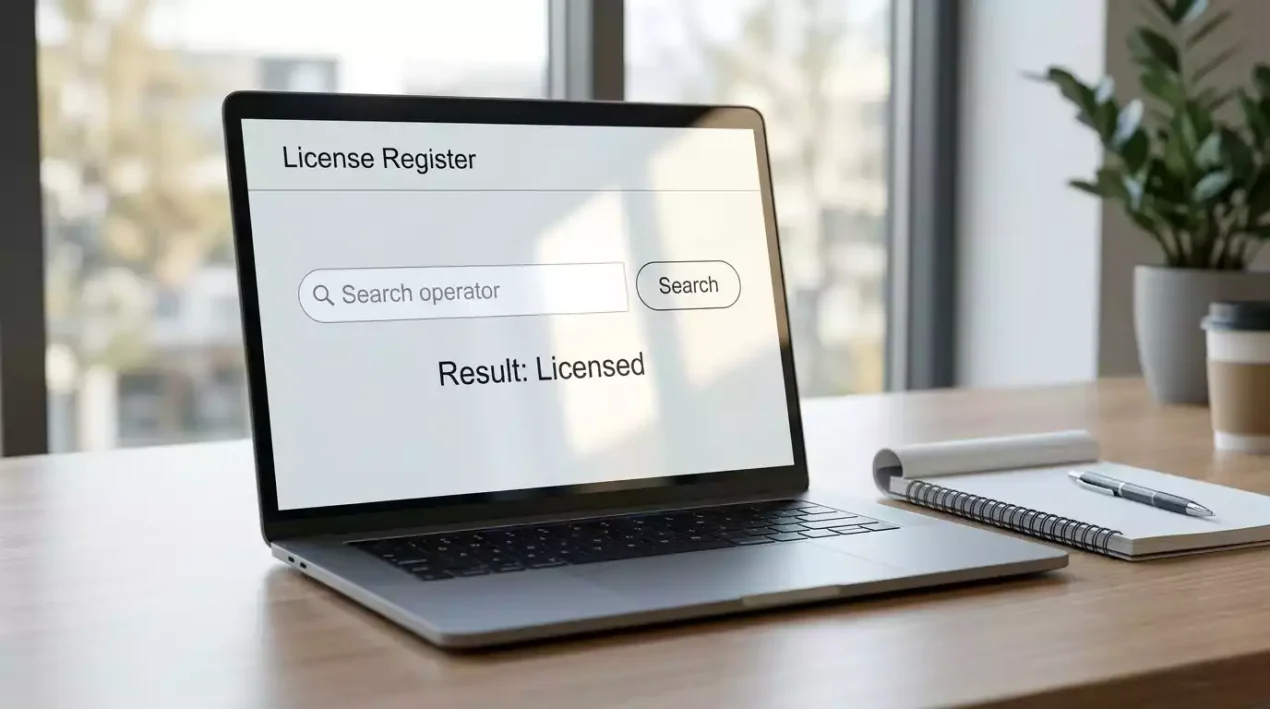
The Gambling Commission’s public register is the most useful tool in any UK punter’s verification kit, and most punters don’t know it exists. The check takes less time than reading the bonus terms, gives you a definitive answer rather than a probabilistic one, and protects you from the entire category of offshore operators that the regulator can’t reach. This is the walkthrough I wish someone had given my friend six months earlier.
Licence Verification: Navigating the Public Register and Complaints
The UK Gambling Commission licenses gambling activities in Great Britain under a tiered system. Each activity type — remote betting, remote casino, lotteries, gaming machines, and so on — requires its own specific licence. An operator running an online sportsbook with horse racing markets needs a “remote betting standard” licence at minimum. If they also run casino games or slots, they need additional licences for those products. The register shows exactly which licences each operator holds.
As of the most recent UKGC industry statistics, there were 3,086 licensed gambling activities held by operators on 31 March 2025, down 2.3% from the prior year. The number of licensed betting premises in Great Britain fell to 5,931, the tenth consecutive reporting period of decline. The licensed market is consolidating around fewer, larger operators, which means the directory is shorter than it used to be — and that the gap between “an operator I haven’t heard of who’s UKGC-licensed” and “an operator I haven’t heard of who isn’t UKGC-licensed” is widening.
The practical implication is that if you encounter an operator you don’t recognise, the prior probability they’re unlicensed is higher than it was five years ago. The shrinking licensed market means most legitimate operators are names you’ve already encountered. Unfamiliar branding is more likely to be either a sub-brand of a major operator (which the register will confirm) or an unlicensed operator (which the register will deny by absence).
A licence isn’t just regulatory permission to take bets. It comes with conditions: anti-money-laundering compliance, responsible gambling measures, financial reserve requirements, dispute resolution obligations, advertising standards. An operator holding a UKGC licence is doing meaningful work behind the scenes to keep that licence. An operator without one is doing none of that work, regardless of what their website claims.
Walking through the public register
The register is hosted on the Gambling Commission’s main site. The interface is functional rather than slick — it’s a search box and a results table. You can search by operator name, by licence number, or by activity type. For most verification purposes, searching by operator name is enough.
Type the operator’s name as it appears on their site. The register returns matching entries, each showing the licensed operator name (which may differ slightly from the trading name), the licence types held, the activity classes covered, and the licence status (active, suspended, revoked). Click through to the operator’s detailed page to see the full record, including any associated trading names, the operator’s registered address, and any historical enforcement actions.
The key fields to check are licence status (must be “active”), licence type (must include the activity the operator is offering you — remote betting standard for an online sportsbook), and the trading name match. Some legitimate operators trade under brand names that differ from their licensed entity name. If the trading name on the site doesn’t appear in the register entry under “trading names”, that’s a red flag that warrants more investigation. The legitimate operators will list all their brands transparently because they have nothing to hide.
Ismail Vali at Yield Sec has spoken extensively about how the gap between casual punter assumption and regulatory reality is what unlicensed operators exploit. The mainstream consumer, he’s said, gains nothing from using an illegal gambling operator in Great Britain — but they often don’t know they’re using one until something goes wrong. The register is the tool that closes that gap, and it’s the tool that the casual market doesn’t know to use.
Red flags on fake or misleading sites
The pattern recognition I’ve developed over years of reader queries is mostly built around a handful of warning signs that crop up repeatedly. None of them are definitive proof of fakery on their own, but in combination they signal that something is wrong.
The first is licence references in the footer that don’t match the register. An unlicensed operator will often display a number that looks like a UKGC licence reference and a vague jurisdiction line — “licensed and regulated by…” — without specifying which regulator. The reference is usually fabricated or borrowed from an unrelated operator. Checking the reference against the UKGC register takes seconds; the mismatch is conclusive.
The second is jurisdictional confusion. Sites that mention Curaçao, Costa Rica, Antigua, or other offshore licensing jurisdictions are not UKGC-regulated, even if they accept UK punters. The offshore licences don’t carry UK consumer protections. The fact that the operator is “licensed somewhere” is essentially worthless for a UK customer.
The third is unverifiable corporate information. Legitimate UK operators publish their registered company name, company registration number, registered address, and parent company structure. The information is available on Companies House for any UK-registered entity. If the operator doesn’t disclose this information, or if the disclosed information doesn’t match Companies House records, treat the operator as suspect.
The fourth is implausibly generous terms with implausibly soft conditions. A site offering 12 places at a third the odds on the Grand National with no minimum stake, no wagering requirements, and no maximum payout cap is not running a legitimate book. Real bookmakers operate within margin constraints that make those offers commercially impossible. The headline is bait, and the bait is the entire commercial strategy. The wider picture of how unlicensed operators recruit through inflated offers is in the overview of UK black-market betting risks.
The fifth is aggressive marketing through unusual channels. Adverts on pirate streaming sites, unsolicited social media direct messages, search results from terms you didn’t actually search for — these are all distribution channels that legitimate UK operators avoid because of advertising standards compliance. Unlicensed operators use them because they have no compliance to worry about.
What to do if something goes wrong
The complaints route if you’ve already deposited money depends on whether the operator is UKGC-licensed. If they are, your first stop is the operator’s own customer service. If that doesn’t resolve the issue, you can escalate to the operator’s nominated alternative dispute resolution (ADR) provider — every UKGC-licensed operator is required to have one. The ADR provider is a neutral third party who arbitrates the dispute. If you’re still unhappy, you can complain to the Gambling Commission directly, who may take regulatory action against the operator if a pattern of misconduct emerges.
If the operator isn’t UKGC-licensed, the route is much harder. You have no UK consumer protection because the operator isn’t subject to UK law. Your only realistic options are a chargeback through your card issuer (which only works for recent transactions and only if the operator hasn’t already pulled the money out of UK banking) or a complaint to whatever jurisdiction the operator claims to be licensed in. The success rate of these recoveries is low.
The Gambling Commission has been increasingly active in supporting punters who’ve been caught out by unlicensed operators. They publish warnings about specific sites, work with search engines to deindex unlicensed operators, and coordinate with payment processors to block transactions. In 2025-26, the regulator issued 741 cease-and-desist notices and reported nearly 400,000 URLs to search engines. The enforcement infrastructure is real and growing, but it works much better as a preventive tool than as a recovery mechanism. The Treasury has allocated an additional £26m over three years specifically for this work, which gives some sense of the scale of the problem.
The single biggest piece of advice I can give is to do the verification before depositing, not after. Once the money is gone, the recovery process is grim. The two minutes spent on the register at the start saves the six months of trying to claw the money back.
What does ‘remote betting standard’ mean on the UKGC register?
Remote betting standard is the licence type that authorises an operator to take bets remotely (online or by phone) on sports and racing in Great Britain. It’s the specific licence you need to look for on any operator running an online sportsbook with horse racing markets. The standard refers to standard-risk activities; higher-risk products like in-play betting on certain events may require additional licence categories.
Can a UK-facing site advertise odds without a UKGC licence?
No, not lawfully. Any operator taking bets from UK consumers is required to hold a UKGC licence under the Gambling Act 2005. Operators based offshore who accept UK customers without a UKGC licence are operating illegally in the UK, regardless of what other licences they may hold in other jurisdictions. The UKGC has powers to act against unlicensed operators reaching UK consumers, though the enforcement reach is limited where operators are physically based abroad.
This material was created by the PlaceLedger team.
Related posts

In-Play Place Market Mechanics: How Live Pricing Actually Works During a Race

UK Betting Taxation: How the Punter’s Tax-Free Status Actually Works