
Understanding Tote and Britbet Place Pools
 Available in US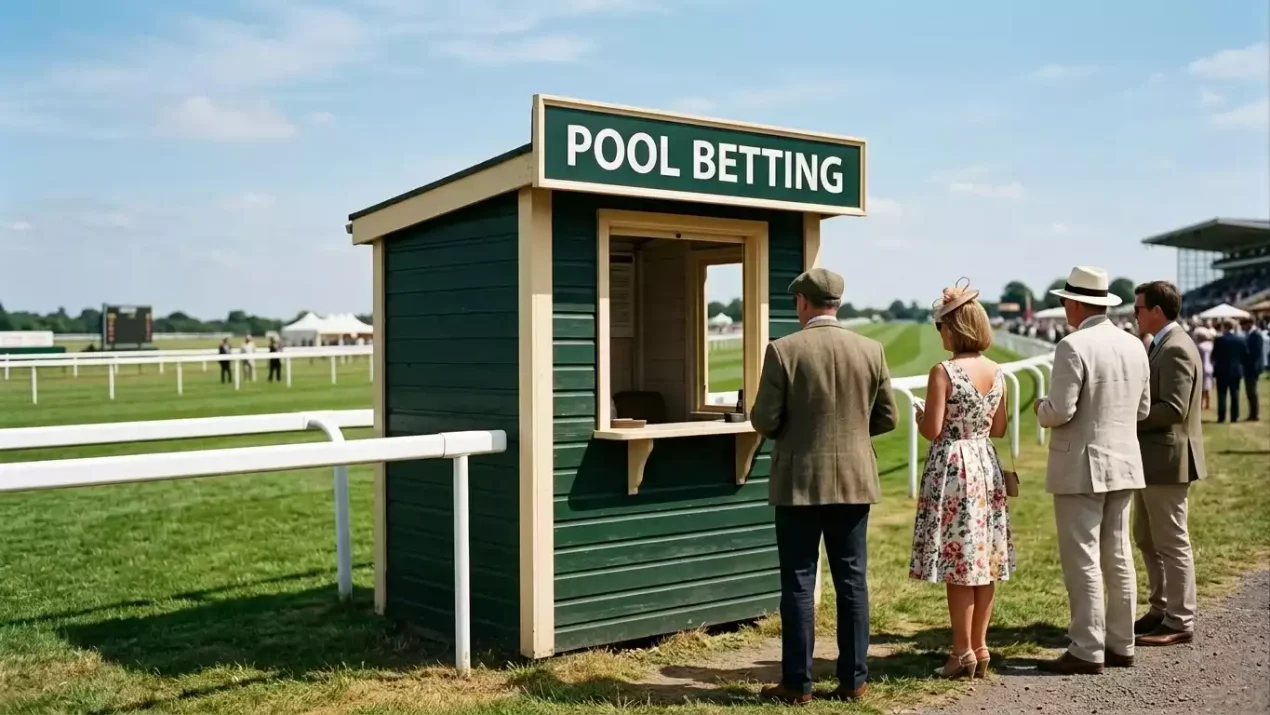
Dividend Variations: Reading the Tote Board and Market Indicators
It was a soft November afternoon at Wincanton, second race on the card, and I had a 14/1 shot in the place market with a high-street firm at 1/4 odds for top three. The horse ran second. I collected £4.50 on my £1 stake. The bloke next to me at the bar showed me his Tote place ticket on the same horse — same £1 stake, same race, paid out £12.30. That gap is not unusual on smaller midweek fields with rough outsiders, and it is the reason place pool betting still matters even in an era where fixed-odds dominates the high street.
The Tote has been operating place pools at every British racecourse for over a century, and since 2018 the on-course pool branding has been Britbet at most tracks, with the Tote brand retained for online and off-course markets. The mechanics are identical underneath — money goes in, deductions come out, the surviving pool is split among winning tickets — but the headline brand you see depends on whether you’re standing in front of a betting ring tote board or logging into an account online.
I have been laying down place pool stakes for the best part of a decade, and I still think most casual punters underrate them badly. Once you understand how the dividend is built and where the value clusters, the place pool becomes a permanent fixture in your race-by-race thinking.
How a place pool dividend actually gets calculated
Forget odds for a moment. The Tote place pool is a parimutuel — everyone’s money goes into the same bucket, the operator takes a deduction off the top, and what survives is split between everyone who backed a horse that finished in the qualifying places. Your dividend is published as a return per £1 unit, so a place dividend of £3.40 means a £2 stake pays back £6.80.
The number of qualifying places follows standard UK racing place terms: two places for fields of five to seven runners, three places for eight to fifteen, four places for handicaps with sixteen or more. Non-handicaps with sixteen or more give three places. Same rules you would see on a fixed-odds each-way bet, just applied to a different settlement mechanism. The pool deduction sits around 19 to 22 percent depending on the bet type — place pools sit at the lower end of that range, which is part of why they offer better value than the exotic pools where deductions run higher.
The bit that catches people out is that there is no advertised price when you place your bet. You stake into the pool blind. The dividend gets calculated only after the race is settled and the surviving pool is divided across the number of winning unit tickets on each placed horse. Heavy money on a favourite drags that horse’s dividend down. Light money on an outsider that nicks third sends its dividend through the roof.
This is why the Tote excels on rough outsiders in midweek racing. On a Saturday handicap at Cheltenham with a 4/1 favourite that places, the Tote dividend usually sits within a few percent of the SP-based each-way return. On a 25/1 outsider in a Wolverhampton all-weather sprint with eleven runners and a thin betting market, the Tote can pay multiple times what a fixed-odds book would have offered. I have collected place dividends north of £15 per £1 in those scenarios more times than I can count.
Britbet, the Tote and how the brand split actually works
There is genuine confusion among newer punters about whether Britbet and the Tote are the same thing or two different operations. The short answer is that they are operationally joined but commercially distinct. Britbet was set up by a consortium of British racecourses to operate the on-course pool from 2018 onwards, taking over the racecourse-facing operation from the previous Tote owner. Online and off-course pools continued under the Tote brand. The two pool sources were physically separated for a brief period, which fragmented the liquidity, before being reunited into a single commingled pool.
For a punter, that means your on-course Britbet ticket and a Tote ticket placed online into the same race draw from the same pool of money and pay the same dividend. The branding difference is purely about which counter or app took your stake. Pool size matters because larger pools produce more stable dividends — a small pool with one big lump of money skewing toward a single runner produces volatile payouts. Reuniting the pools improved liquidity on weekday racing in particular, where on-course turnover alone was historically thin.
Pool turnover overall has been under pressure. Turnover per race across British racing was down 8 percent year-on-year in 2024-25 and 19 percent versus 2021-22 levels, and pool betting has felt that contraction acutely. The Tote operator has been investing in product — guarantee pools on major Saturdays, a tighter mobile interface, integration with cross-channel offers — partly to defend pool liquidity against the gravitational pull of fixed-odds firms.
When the place pool beats the price every time
Five scenarios where I consistently take Tote place over fixed-odds, drawn from years of comparing dockets back at home over a cup of tea.
Field size of nine to twelve runners with no dominant favourite. Three places paying, the favourite isn’t sucking pool money disproportionately, and dividends spread evenly across placed runners. This is the sweet spot. I find myself reaching for the Britbet ticket window almost reflexively in these.
Rough outsider in a competitive midweek handicap. A 20/1 or 33/1 runner you fancy on the form. Fixed-odds books will offer 5/1 a place at 1/4 terms, which is generous on paper. The Tote will frequently pay double that or more because so little pool money has gone on the horse.
Apprentice or amateur races. These attract less mainstream betting volume, the pool money concentrates around recognisable names, and value horses outside the top three in the market routinely produce inflated Tote dividends when they place.
Big-field handicaps where you fancy a horse outside the front of the market but believe it has a strong each-way profile. The fourth place dividend in a sixteen-plus runner handicap can be substantial because only four horses share the pool, and the fourth-place finisher has often gone off at a long price.
All-weather sprints with full fields and unfashionable runners. The pool tends to be thinner, market signals weaker, and price discovery on the fixed-odds side is often patchy too — meaning value can show up on either side depending on the day.
Where the place pool loses out is the obvious flip. Short-priced favourites in small fields drag dividends down to the bone. A 6/4 favourite at Lingfield in a six-runner novice will pay back something close to £2.10 to £2.30 on a £1 place pool ticket — fixed-odds at 1/4 of the win price returns identical or marginally better and you knew the price before you stuck the money in. There’s no edge in pool betting that horse.
Reading the Tote board in the betting ring
The on-course tote board is one of the underrated information sources at a British racecourse. It shows running pool totals — the money committed so far to each runner across win and place pools — and gives you a live read on where the money is going. In the final minutes before a race, the tote board often diverges from the bookmakers’ chalk in ways that tell you something real.
If a horse is steaming on the rails — bookmaker prices tumbling — but the tote pool on that horse isn’t moving proportionally, the smart money on-course probably isn’t behind the move. Conversely, if a horse is drifting on the rails but the place pool is filling up steadily on it, somebody on-course thinks it’ll run a race even if the win market is cooling.
The other tell is dividend projection. Larger Tote boards on the main meetings display a projected dividend per £1 — what the pool would pay if the race finished now and the projected ticket count held. That projection updates continuously and lets you compare the implied Tote place dividend against fixed-odds before you commit. On any horse where the projection looks substantially better than the bookmakers’ each-way offer, the pool ticket is the play.
Don’t expect mathematical precision from these projections. Late money in the closing two minutes of betting can shift dividends meaningfully, and the projection only reflects money already in the pool. But as a real-time pricing signal it beats sticking your finger in the air.
Pool betting through the app versus on the day
The Tote app gives you commingled pool access from anywhere, which I use most for midweek racing when I can’t get to a track. The interface lets you stake into win, place, exacta, trifecta and the placepot from the same account. Dividends update live, and there is no information disadvantage versus an on-course punter because the pools are commingled.
One thing the app does that on-course betting doesn’t is keep a clean record of every stake — bet history, settled dividends, win percentage by bet type. That data is more useful than it sounds. After a few months you can see plainly whether your pool place bets are returning more or less than equivalent each-way stakes at fixed odds. The numbers don’t lie. If your pool dividends are systematically beating fixed-odds returns, your selection process is suited to pool betting and you should be allocating more stake there. If not, you have a genuine information signal to change something.
What the app cannot replicate is the ring atmosphere — watching the tote board flicker, hearing the bookmakers’ last-minute call-outs, getting a feel for where the on-course money is going. That information edge exists, and on big-money racing days it is worth being at the track even if you stake into the pool through your phone for the convenience.
Pool place bets sit alongside, not against, fixed-odds
The right way to think about Tote place pools is not as a competitor to fixed-odds each-way but as a parallel market with different value characteristics. They settle on the same outcome — your horse finishing in the qualifying places — but the dividend mechanism is fundamentally different, and the conditions where each market offers value are different too.
On Saturday afternoon featured racing with heavy betting volume, fixed-odds is the default for good reason. Best Odds Guaranteed, generous place terms on the big handicaps, extra-places promotions and the ability to lock in your price before the off all work in the punter’s favour. On thin midweek racing, rough outsiders, four-place handicaps and races where the pool money is moving differently to the chalk, the Tote earns its place in the rotation. The skill is knowing which is which and committing accordingly. For a fuller picture of how field size determines what each market offers, the breakdown of place terms by field size explains the threshold rules that drive both pool dividends and fixed-odds settlement.
Treat the place pool as a tool, not a religion. The punters who do best with it are the ones who can identify the half-dozen races per week where it offers genuine value and let the rest go through on fixed-odds without forcing the issue.
Why do Tote place dividends sometimes pay much more than fixed-odds returns?
Tote dividends come from a parimutuel pool where money is split among winning tickets. When few punters back a placed runner, the surviving pool divides among a small number of tickets, producing inflated dividends. This effect is strongest on rough outsiders and four-place handicaps.
Is the Britbet on-course pool different from the Tote online pool?
No. The two pools are commingled, so an on-course Britbet ticket and an online Tote ticket on the same race draw from the same money and pay identical dividends. The brand split reflects who took the stake, not where the pool sits.
When should I avoid backing place pools?
Short-priced favourites in small fields produce thin pool dividends that rarely beat fixed-odds each-way returns. Pool betting works best when the market is competitive, fields are mid-sized to large, and the runner you fancy is not the public favourite.
This material was created by the PlaceLedger team.
Related posts
In-Play Place Market Mechanics: How Live Pricing Actually Works During a Race

UK Betting Taxation: How the Punter’s Tax-Free Status Actually Works