
Grand National Place Betting and Aintree Markets
 Available in US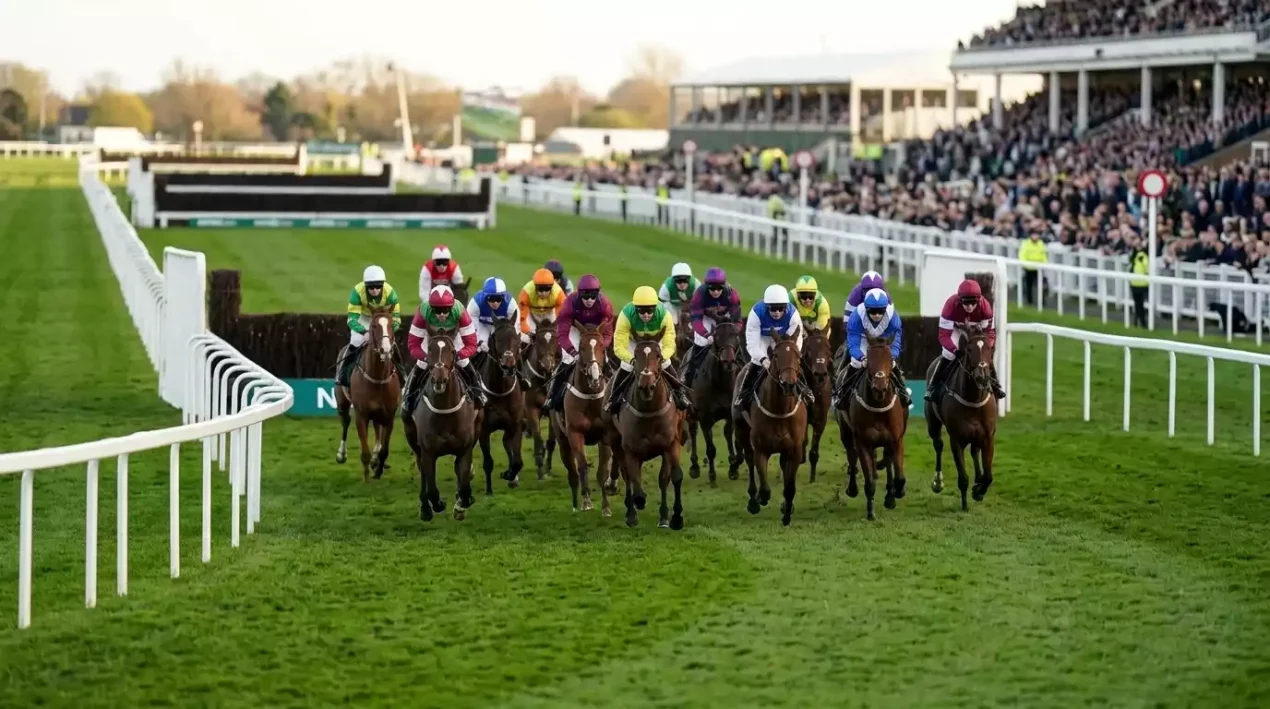
Aintree Market Analysis: Extra-Place Windows and Field Constraints
Start with the scale and the rest of the year makes more sense by comparison. The Grand National attracts roughly 700% more in stakes than the Cheltenham Gold Cup, which is itself one of the biggest betting heats in the British calendar. That gap isn’t a marketing line — it’s the gulf between a race the entire country bets on and a race that only racing fans bet on. Around 17% of adult Britons plan a bet on the National each year, which is the kind of penetration figure you normally see for the Lottery, not for a single sporting event.
What that does to place markets is structural. When a quarter or more of the staked money is each-way, and when most of that money comes from people who couldn’t tell you what a handicap mark is, the place side of the book becomes the dominant exposure. Bookmakers don’t just price the win and let the place follow mathematically. They sculpt the place side — extra places, enhanced fractions, money-back-as-a-free-bet concessions — because that’s where the bet most punters are actually about to strike sits.
The field size compounds the effect. Standard place terms on a 16-plus runner handicap pay four places at a quarter the odds. The National routinely loads forty runners onto the card. Bookmakers don’t have to pay any extra places to comply with the Rules of Racing, but commercially, they almost always do. The headline race of the year being priced on the same terms as a Wednesday Wolverhampton card would be a failure of nerve, and they know it.
What bookmakers have done with place terms over the years
If you remember Aintree from a decade ago, you’ll remember the place battle was a quieter affair — five places at a quarter the odds was the standard, and any operator going to six was considered generous. That ratchet has moved hard. In the last three or four Nationals I’ve watched, the headline offers from the major UK firms have settled into a band that runs from six to eight places, almost always at a quarter the odds.
The mechanics matter. A bookmaker offering eight places at 1/4 on a 40-runner National is essentially paying a place dividend to anybody whose horse finishes in the top fifth of the field. From a punter’s perspective, that’s the difference between a place bet being a longshot and a place bet being a serious proposition. From the bookmaker’s perspective, the win prices around the favourite tighten meaningfully when the place side is fat. I’ve seen 8/1 winners go to 6/1 partly because the place liability on those runners is now eight-deep rather than four-deep. The operator moves margin from the win to the place to attract punters who care more about cashing a place ticket than picking a winner.
One more piece of context: a meaningful share of stakes on the National goes offshore. Estimates around the 2025 renewal put the figure at roughly five percent of total turnover — about £10m — heading to unlicensed sites. Those operators advertise inflated place terms precisely because they know that’s the lever that pulls casual punters. The terms look better on paper. The bet itself is worse in every other respect, which is a thread I’ll come back to.
Each-way share and how casual punters actually stake
The numbers on staking pattern at the National are the kind of thing that turns a bookmaker’s head. Around 75% of all bets struck on the race are each-way, which is the highest each-way share of any major race in the British calendar by some distance. For comparison, on a Royal Ascot Group 1 you’d be lucky to see a quarter of the money going each-way. The National is the only race where the place side of the book is consistently larger than the win.
The reason is mostly cultural and partly mathematical. Casual punters know they’re picking out of a field of forty. They know the favourite often doesn’t win. They want a return, however small, on the £10 they’ve put on, and each-way at headline place terms gives them a fighting chance of getting their stake back even when their horse trails in fifth at twenty lengths. Around 43% of National punters in 2025 staked less than £10 in total, and 77% of those surveyed agreed that having a bet on the race was “part of British culture” — a phrase that does a lot of heavy lifting once you start to look at how the place market behaves.
From an analyst’s perspective, the each-way default is often a mistake at short prices and a reasonable bet at longer prices. At 8/1, a quarter-odds place return of 2/1 is roughly fair compensation for the place stake. At 4/1, you’re getting evens on the place side, which is bad value unless the place terms are exceptional. At 33/1, you’re getting better than 8/1 for placing, which can be a strong proposition on a horse with the right profile for a long, attritional National trip. The casual punter doesn’t run that calculation. They tick “each-way” because that’s what their dad did. If you want a more thorough treatment of when each-way is the right structure and when a place-only single is sharper, the analysis of each-way versus place-only mechanics goes through the maths properly.
The enhanced terms window and when to strike
Bookmakers don’t release their National place terms all at once. The pattern over the last five or six years has been a slow drip, starting two or three weeks before the race with a tentative six places, building through the week of the race as operators look across the road at each other and feel the pressure. By Friday evening before the race, most of the major UK firms have settled on their final offer — typically seven or eight places at a quarter the odds.
The tactical question is whether to lock in early or wait for the best terms. I lean towards waiting, with one exception. If you’ve struck an ante-post position at a price you really like — say a 25/1 outsider who’s been backed in to 16/1 — and the bookmaker offers a “best terms” guarantee on race day, you take it. You’re locking in the price advantage and getting the place upside thrown in. If you’re betting on the day off the morning prices, there is no upside to striking before Saturday lunchtime. The terms can only get better as the place battle escalates, and they rarely shrink once announced.
One thing to watch is non-runners. The National field is declared maximum at forty, but the actual runner count on the day is usually three or four short of that. If declarations drop the field below 32, some operators will quietly trim their place offer back from eight places to seven. Read the small print — the relevant phrase is usually “subject to a minimum field of X”. If the offer is dependent on a full field, it isn’t really an eight-place offer at all.
How to think about the National place bet in your own staking
The bet I make on the National is not the bet I make on a Wednesday handicap, and the staking should reflect that. The race rewards horses with a particular profile — stamina, jumping at speed under pressure, a recent run within the last six weeks, an experienced jockey. The place market is where the value sits because the win market is over-bet by casual money flowing onto the top of the market.
What I look for is a horse priced between 16/1 and 33/1 who has a credible National profile — a recent good run in a staying chase, ideally over three miles plus, with a jockey who has ridden the fences before. A place-only single bet on that horse at eight places gives you a roughly one-in-five chance of cashing the ticket at decent odds. The expected value calculation on that bet at a quarter the odds is meaningfully positive in most years. The same horse backed each-way at 16/1 has a positive expectation on the place side and a roughly neutral expectation on the win side, which is a structure I’m comfortable with.
The trap to avoid is the favourite at short prices each-way. A 7/1 favourite each-way at eight places paying a quarter the odds gives you a place return of about 1.75/1. The probability of placing in the top eight of a forty-runner National is genuinely high for a strong favourite — but not high enough to make that bet profitable. You’re effectively staking half your money on a place at odds-on, which is a structurally bad position. If you fancy the favourite, back it to win.
What I tell the once-a-year punters
The advice I give the people who message me every April is the same it’s always been. Pick a horse you actually like at a sensible price. Strike a place-only bet at the best terms you can find from a UKGC-licensed operator, ignore the offshore sites that promise nine places at a third the odds, and remember that the goal is to enjoy the race.
The huge influx of casual money creates inefficiencies — short prices on glamour names, longer prices on credible outsiders, place terms that are commercially generous because the bookmakers want to be remembered when those punters next think about a bet. That’s the edge for the disciplined punter, and it shows up every April whether the rest of the year has been good or bad. If you cash a ticket, that’s a good Saturday. If you don’t, the £10 was the entry fee for the only Saturday in the year when British racing genuinely belongs to everyone. For more detailed breakdowns of major UK races, visit our expert horse racing betting guide.
How many places do bookmakers typically pay on the Grand National?
The headline offers from major UK operators have settled into a band of six to eight places at a quarter the odds in recent renewals, with some firms going further during the enhanced-terms window in the week of the race. The minimum under the standard handicap rule is four places at a quarter the odds for a field of 16-plus runners, but commercial pressure on the National makes that floor almost irrelevant.
Why is the Grand National disproportionately popular with casual punters?
The race has cultural status that no other British sporting event matches — around 17% of adults plan a bet, the race is free-to-air on ITV, and the field size of forty gives every casual punter a horse to follow. The result is staking pattern dominated by small each-way bets, with roughly 75% of all stakes on the race going each-way rather than win-only.
This material was created by the PlaceLedger team.
Related posts
In-Play Place Market Mechanics: How Live Pricing Actually Works During a Race
UK Betting Taxation: How the Punter’s Tax-Free Status Actually Works