
Non-Runner No Bet and Place Markets
 Available in US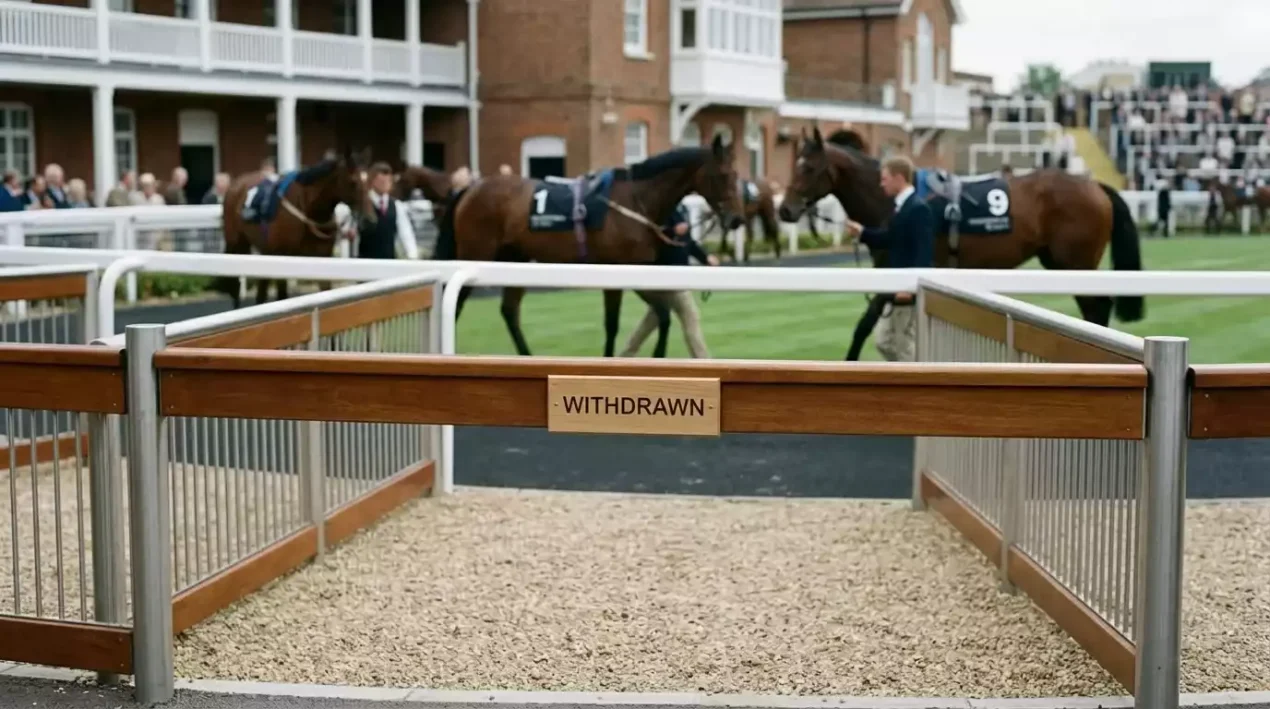
That conversation isn’t unusual. Non-runner no bet, usually shortened to NRNB, is one of those bits of bookmaker policy that punters assume is universal until they discover it isn’t. The rules vary by operator, by market, and by how early you’ve struck the bet. Getting it wrong costs real money, and the cost compounds when you’re betting each-way because the place stake gets eaten on the same terms as the win.
Rule 4 Mechanics: Calculating Reductions for Day-of-Race Withdrawals
Default ante-post betting in UK racing carries no refund for non-runners. You strike your price weeks or months in advance, and if your horse doesn’t make it to the start, your stake is gone. That’s the deal — you accept the risk of withdrawal in exchange for the early-bird price, which is usually meaningfully bigger than what you’d get on the day.
NRNB changes the deal. Under NRNB, the bookmaker refunds your stake — both win and place portions of an each-way — if your selection doesn’t run. The trade-off is the price. NRNB markets are usually priced slightly tighter than default ante-post on the same race, because the bookmaker is carrying the withdrawal risk. The same 20/1 on a default ante-post might be 16/1 or 18/1 on NRNB.
Most operators activate NRNB on the major races at fixed points in the calendar. The Grand National typically goes NRNB six to eight weeks before the race. The Champion Hurdle and the Gold Cup at Cheltenham go NRNB anywhere from a fortnight to a month before Festival week. The Derby goes NRNB closer to the Epsom meeting. Royal Ascot Group 1s often go NRNB the week before the meeting. The pattern is that NRNB kicks in once the field is close to settled and the bookmaker can quantify the withdrawal risk.
If you’ve struck an ante-post bet before NRNB activates, you don’t automatically get retroactive NRNB cover. Your bet is settled under the rules in force when you struck it. Some operators offer goodwill refunds in exceptional cases — a horse dying, for example, can sometimes trigger a discretionary refund — but the general rule is that early ante-post bets carry the full withdrawal risk that the early price is supposed to compensate you for.
Rule 4 deductions and how they affect place returns
If your horse runs but another runner is withdrawn after final declarations, Rule 4 applies. This is where the place side of an each-way bet gets quietly worse without most punters noticing.
Rule 4 is a deduction from the winning return on bets struck at fixed odds before the withdrawal, calibrated to the price of the withdrawn runner at the time of withdrawal. A 5/2 favourite being withdrawn triggers a 25p in the pound deduction. A 10/1 outsider being withdrawn triggers 10p. The deductions are applied to your winnings, not your stake, so the maths are: profit times (1 minus deduction rate) gives you your reduced profit, plus stake back.
The crucial thing for place punters is that Rule 4 applies equally to the win and the place portions of an each-way bet. If you’ve staked £10 each-way at 14/1 on a horse that places at a quarter the odds, your gross place return is £35 (£25 profit plus stake). If a 4/1 horse is withdrawn after declarations triggering a Rule 4 of 20p in the pound, your place profit drops from £25 to £20 — you take home £30 instead of £35. The win side gets the same percentage hit, but because the absolute number is larger, the cash impact is bigger there. Both sides of the bet feel the deduction.
The same logic applies to multiple Rule 4s on a single race. If two horses are withdrawn after declarations, the deductions are summed and applied as a single percentage. Three horses being withdrawn can take 40p or 50p in the pound off your winnings, which is why the size of the withdrawn runner matters as much as the count. A single short-priced favourite withdrawal can hit your return harder than three outsider withdrawals combined.
Examples that show how this plays out in practice
Let me walk through a few scenarios that crystallise the rules.
Scenario one. You strike £10 each-way at 25/1 on the Grand National six weeks before the race, under NRNB terms with the bookmaker paying eight places at a quarter the odds. Your horse picks up an injury and is withdrawn ten days before the race. The bookmaker refunds your full £20 stake. You move on. The earlier price doesn’t matter; the NRNB cover does its job.
Scenario two. Same bet, but you struck it eight months before the race, when NRNB wasn’t yet in force. The horse is withdrawn. Your stake is gone — both the win and place portions. There’s no recourse unless the operator chooses to apply discretionary goodwill, which is rare. This is the cost of taking the long-shot ante-post price.
Scenario three. Your horse runs, but the morning of the race two other horses are withdrawn — a 7/2 second favourite and a 12/1 outsider. The Rule 4 deduction is roughly 25p plus 10p, totalling 35p in the pound. Your horse places at 18/1 in a 16-plus runner handicap, paying a quarter the odds. Gross place return on £10 stake: £55 (£45 profit plus £10 stake). After Rule 4: profit reduced to £29.25, plus stake £10 — total £39.25. You’ve lost more than fifteen pounds to deductions you couldn’t have known about when you struck the bet.
Scenario four. Same race, but you struck your bet at the off after the withdrawals had been declared. The starting price you took already reflects the smaller field. No Rule 4 applies, because the deduction is only for bets struck before withdrawal. You get the full place return at the rate priced into your odds. This is one of the few cases where waiting until the off rather than backing early actually saves you money — though it’s hard to plan for in advance, because you don’t know which races will have late withdrawals.
Worth knowing too: the field-size rules for place terms can also shift if withdrawals drop the runner count across a threshold. A 16-runner handicap that loses two runners declared as non-runners on the day reverts to 14 runners on most bookmakers’ terms, which means the place fraction can move from 1/4 to 1/5 and a place can drop off. The breakdown of UK place terms by field size walks through which thresholds trigger which changes.
How operator policies differ
Bookmakers don’t apply NRNB consistently across all markets or all operators. Some firms publish a clear NRNB date for each major race and stick to it. Others activate NRNB market-by-market depending on commercial pressures and how the ante-post book is shaping up. A handful of operators run promotional “NRNB from now” campaigns on selected races to drive ante-post stakes during quiet weeks in the calendar.
The practical advice is to check the market’s terms before you strike. Every operator’s bet slip will show whether NRNB applies and from what point. If the small print doesn’t mention NRNB, assume it doesn’t apply. If you can’t tell, ask customer services before you place the bet — most operators will confirm in writing through their chat function. Don’t rely on assumption, especially on ante-post markets, where the gap between price and risk can be substantial.
One thing the regulator has been quietly pushing on is consistency. The BHA has argued for years that punters deserve clearer ante-post terms across the industry, and there’s a slow movement towards standardising NRNB triggers on the major races. Brant Dunshea, the chief executive of the BHA, has spoken on the broader question of how betting concessions interact with racing’s commercial structure, and the underlying point is that punters who don’t understand the small print are subsidising those who do.
What I actually do with this in my own betting
My rule for ante-post is simple: never strike an each-way ante-post bet on a market that isn’t already NRNB unless I genuinely value the early price enough to wear the withdrawal risk. The exceptions are when the price is exceptional — a 50/1 ante-post on a Cheltenham Festival novice contender, for example, where the upside is so asymmetric that losing the occasional stake to withdrawal is part of the cost. For everything else, I wait until the NRNB window opens, accept the slightly tighter price, and sleep better at night.
On Rule 4, there’s not much you can do other than accept it as part of the game. If you’re betting on a race with a strong short-priced favourite who looks vulnerable to withdrawal — a horse with a stamina question or an unfavoured ground forecast — be aware that any withdrawal of that horse after you’ve struck will hit your returns. You can sometimes time your stake to land after the morning declarations, which removes the risk, though it also removes whatever price advantage you might have got from striking earlier.
Does Rule 4 apply equally to the win and place parts of an each-way bet?
Yes. Rule 4 deductions are applied to winnings on both sides of an each-way bet at the same percentage rate. If a 5/2 favourite is withdrawn after declarations, triggering a 25p in the pound deduction, both your win return and your place return are reduced by 25% of the profit. The stake is returned in full on whichever side wins or places.
If my ante-post horse is withdrawn weeks before the race, do I always get a refund?
Only if the bet was struck under non-runner no bet terms. Default ante-post bets carry no refund for non-runners — the early price you took was compensation for the withdrawal risk. NRNB usually activates on major races a few weeks before the meeting. Check the market’s terms before striking, because the same race may be ante-post default in November and NRNB in February.
This material was created by the PlaceLedger team.
Related posts
In-Play Place Market Mechanics: How Live Pricing Actually Works During a Race

UK Betting Taxation: How the Punter’s Tax-Free Status Actually Works