
Place Betting at UK Racing Festivals
 Available in US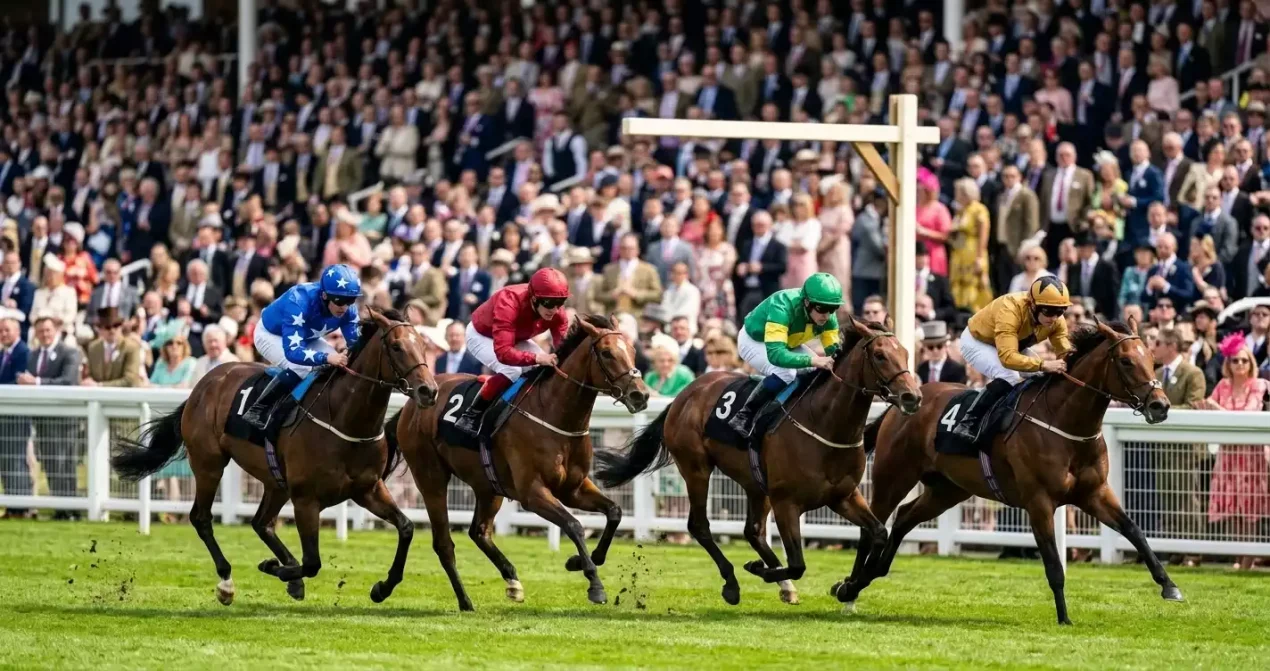
Festival Market Behavior: Analyzing Cheltenham and Ascot Volumes
If you wanted to understand the gravitational pull of festivals on British racing betting in a single statistic, this one will do: every single one of the 28 races on the four-day Cheltenham Festival programme last season landed inside the top 31 races by total betting turnover for the entire jumps season. Twenty-eight races out of roughly 1,400 across the year, accounting for an extraordinary concentration of stakes in four days at one Cotswolds racecourse. During major jump racing events, applying a dedicated Cheltenham extra places strategy is essential for finding true value in crowded fields.
The same gravitational effect happens at Aintree in April, at Royal Ascot in June, at Glorious Goodwood in late July, at York’s Ebor in August, and at St Leger week at Doncaster in September. The British racing calendar isn’t an even spread of evenly bet races; it is a season-long landscape of midweek meetings punctuated by five or six festivals where the betting volume jumps by several orders of magnitude and where the place market behaves entirely differently from the standard schedule.
I have made it my business to understand that difference, because the festivals are where the value of British place betting concentrates. Enhanced place terms layered on big-field handicaps, Best Odds Guaranteed extended to non-runner concessions, place-only single markets that don’t exist on midweek cards — every operator on the British market puts its commercial muscle into the festivals, and the punter who knows the contours of each festival’s place schedule can extract more value in four days at Cheltenham than in three months of standard betting. The flip side is that the casual punter who doesn’t know the schedule is overpaying for the entertainment value of the headline races.
Why festivals shift the place market on every line
The commercial logic for festival enhancements is, once you see it, almost embarrassingly simple. Festivals concentrate punters into a small calendar window. The operator that prices the most generous place terms attracts the most stake. The operator that doesn’t enhance loses turnover to the operator that does. Within forty-eight hours of one bookmaker announcing a sixth-place concession on the Stewards’ Cup, every other UKGC-licensed operator on the British market either matches it or watches the volume drift elsewhere.
The same competitive pressure produces a second effect, which is more interesting. Operators don’t just enhance places to attract turnover; they enhance places to attract first-time depositors and dormant account-holders back to active betting. The festival enhancement is a marketing instrument as much as a place-market product, and the maths-savvy punter who carefully reads the terms — the qualifying races, the deposit thresholds, the bet-type restrictions — gets disproportionately better value than the casual punter who clicks the headline offer and takes the standard terms underneath.
Keith Melrose, the Racing Post’s senior analyst, put the position cleanly in his commentary last March: “Watch out for special offers, though, especially the enhanced place terms that make each-way multiples particularly attractive at Cheltenham.” That call-out wasn’t sentimental — it was a specific recognition that the festival’s enhanced place terms shift the each-way multiple maths in a way the standard schedule does not. Apply the same logic at every festival, with the specific shape of each meeting’s handicaps and field sizes, and you have a working framework for the next several thousand words.
One observation before we drill into individual festivals. The pattern of enhanced places is not uniform across festivals. Jumps festivals like Cheltenham and Aintree push enhancements harder on Grade 1 handicaps and the headline novice hurdles. Flat festivals like Royal Ascot and the Ebor lean towards enhancements on the big handicaps — the Royal Hunt Cup, the Wokingham, the Ebor itself — rather than the Group 1s, where the smaller fields don’t justify operator promotion. Reading the festival is the first skill; reading the individual races within each festival is the second.
The Cheltenham Festival in March
The first time I watched the Gold Cup live from the Prestbury Park lawn, I came away with a conviction I’ve held since: Cheltenham is the British place market in concentrated form. Four days, 28 races, every operator on the market straining to publish the most attractive place schedule, and a captive audience of roughly 220,000 spectators paying close attention to which book offered the best terms.
Last March’s festival, which dropped to 218,839 paying spectators across the four days, was the lowest attendance for the meeting in a decade — excluding the pandemic-affected 2021 — and that softness in gate receipts hasn’t fed through to the betting markets at all. The Gold Cup itself drew a peak ITV audience of around 1.8 million viewers, and twenty of the festival’s 28 races attracted at least a million viewers each. The betting volume that those viewers represent is the engine of Cheltenham’s place market.
The enhancement pattern at Cheltenham is consistent year on year. Bookmakers typically publish enhanced place terms on the headline handicaps — the Coral Cup, the Pertemps Final, the Mares’ Chase, the County Hurdle, the Grand Annual — paying five or six places at the standard one-quarter fraction rather than four. They also routinely offer extra-place concessions on the championship races on each day, even where field sizes are smaller and the standard schedule wouldn’t normally trigger an extra place. The Champion Hurdle and the Stayers’ Hurdle, both run with around twelve to fourteen runners, often see five-place treatment from competitive operators.
The Gold Cup itself is the exception that proves the rule. With typical fields of ten to fifteen runners and a roll of well-known horses, the Gold Cup attracts enormous turnover but rarely sees aggressive place enhancement. Operators don’t need to give away places on the headline race; the volume is already there. The genuine punter-friendly value at Cheltenham sits on the supporting handicaps, where field sizes are largest and the operator’s commercial calculation tips towards generosity.
One nuance I would flag specifically for Cheltenham each-way punters: the festival’s enhanced place windows often open very early — sometimes weeks before the meeting — and then narrow as the off-time approaches. Operators announce six or seven places on the Coral Cup in early March, and casual punters wait for “better” terms that never materialise, missing the window while bookmakers consolidate back to five places by the morning of the race. The early-bird advantage at Cheltenham is real, but it requires you to commit to the place when the terms are most generous, accepting that you’re locking in an ante-post price that won’t change.
The strategic implication for the each-way multiple punter — which is where Melrose flagged Cheltenham value most directly — is that the festival is the natural home of the each-way Lucky 15 and the each-way Yankee. The extras layered onto multiple legs compound through the multiple, and a six-place concession on three legs of an each-way Lucky 15 can shift the expected return of the entire ticket meaningfully. The variance is brutal, of course, but the maths is the maths.
Aintree and the Grand National
Aintree in April is the festival that bends the British place market more sharply than any other meeting on the calendar, and the Grand National sits at the centre of that distortion like a small black hole. Roughly £200 million is staked on the Grand National itself, with the three-day Aintree Festival generating in excess of £250 million in total betting turnover. To put that in perspective: more than seven times as many bets are placed on the Grand National as on the Cheltenham Gold Cup, according to data Entain has compiled from its global betting operations. Seven hundred per cent more turnover on a single race than on the most prestigious race of the jumps season.
The Grand National is, in the bookmaker’s commercial calculation, a once-a-year obligation to recruit casual punters and reactivate dormant accounts. Every operator on the British market publishes its most aggressive promotional schedule for the National, and the place market is the centrepiece. Seven, eight, sometimes nine places at one-quarter the odds are the standard concessions on the headline race — far beyond the four places the standard 16+ handicap schedule would dictate.
The casual punter profile at Aintree is what makes this commercially viable. Around 17 per cent of UK adults plan to bet on the Grand National each year, with 43 per cent of those punters planning to stake less than £10 on the race. Seventy-seven per cent of British adults agreed in a YouGov poll last year that the Grand National is “part of British culture.” That ratio of small-stakes-casual-bet to once-a-year-engagement is precisely the commercial wedge that operators carve their National promotions into.
The structural breakdown of National stakes matters for understanding the place market. Industry estimates suggest that roughly 74 to 75 per cent of all Grand National bets are placed as each-way. That’s a vastly higher each-way share than any other British race, and it reflects the casual punter’s instinct that the each-way is the right structure for a 40-runner big-field handicap where any of the leading dozen horses could win. The each-way logic is correct for the casual punter on the National — at long enough odds in a deep enough field, the maths works — but the same casual punter often misses the place-only option that some operators do offer, which can be a slightly better bet for horses at the shorter end of the National market (the 7/1 or 10/1 leading contenders).
Beyond the National itself, the Aintree Festival’s supporting card produces some of the season’s most aggressive place enhancements. The Topham Chase, the Foxhunters’, the Maghull Novices’ Chase — every one of those races sees competitive operators push for five, six, or seven places at one-quarter the odds. The Friday card at Aintree is, in turnover terms, comparable to a peak day at Cheltenham, and the place schedule reflects that competitive pressure.
Detailed treatment of the National’s place-market specifics — the changes the BHA has made to the start, the impact of reduced field sizes, the bookmaker promotional cadence — sits in our Grand National place betting piece, which covers ground I won’t repeat here. The festival-level point is that Aintree is the single highest-leverage weekend on the British place-market calendar, and casual punters who walk in without studying the place terms are leaving real money on the table.
Royal Ascot in June
Royal Ascot is the festival where the place market behaves least uniformly across the week. The five-day Royal Meeting in late June covers eight Group 1 races, three Group 2s, several big handicaps, and a sprinkling of conditions and Listed races, and the place enhancements differ wildly across that mix. Group 1s with ten to fourteen runners typically receive minimal enhancement — the operator’s commercial calculation is that the small field doesn’t justify giving away an extra place when the race already attracts massive volume on its own merits.
The genuine place value at Royal Ascot lives in the two big-field handicaps of the week: the Royal Hunt Cup on Wednesday and the Wokingham Stakes on Saturday. Both routinely attract 20 to 30 runners, both fall squarely in the 16+ handicap band, and both see aggressive operator promotion. Six places at one-quarter the odds is the standard enhancement on the Hunt Cup, with seven or eight places appearing on the Wokingham at the most competitive books. The Stewards’ Cup at Goodwood follows the same pattern later in the season, but Ascot’s headline handicaps come first in the flat festival cycle and set the tone for the rest of the year.
Royal Ascot also produces some of the most aggressive Best Odds Guaranteed offerings on the British calendar. Every operator extends BOG to the five-day meeting; some go further with double-the-odds concessions on second-placed favourites, dead-heat insurance, and money-back specials on near-misses. The casual punter who walks in with a £10 each-way habit and doesn’t read the promo terms typically captures only a fraction of the available concessions.
One technical point worth stating clearly. Royal Ascot’s place market opens earlier than almost any other British festival — operators publish ante-post place prices on the Hunt Cup and the Wokingham four to six weeks before the meeting. The enhanced-place windows on these handicaps narrow as the off approaches, but the ante-post terms typically lock in at the time of strike, meaning a six-place ante-post bet remains a six-place bet even if the operator reduces day-of-race terms to five.
York’s Ebor Festival in August
The Knavesmire’s Ebor Festival in mid-August is the late-summer counterpart to Royal Ascot, and the place market dynamics are similar but not identical. Four days of Group 1, Group 2 and Group 3 racing, with three big handicaps that attract enormous fields and aggressive operator promotion: the Ebor itself, the Nunthorpe-week consolation handicap, and the Galtres Stakes (a Listed race with handicap-style fields in recent years).
The Ebor handicap is the headline race for the festival’s place market. With fields routinely topping 20 runners — and a maximum field of around 22 — the Ebor falls cleanly in the 16+ handicap band and triggers four places at one-quarter the odds as standard. The operator enhancements typically push that to five or six places, occasionally seven, with the most competitive operators offering the deepest schedule.
The Juddmonte International, the Yorkshire Oaks, and the Nunthorpe — the three Group 1s of the festival — sit at the other end of the commercial spectrum. Small competitive fields of seven to ten runners, prestigious races with established markets, minimal operator pressure to enhance places. The standard 5–7 or 8+ band applies depending on field size on the day, and most operators don’t promote enhanced places on these races at all.
What I find personally fascinating about the Ebor week is the contrast between the headline-handicap place market (deep, generously enhanced, casual-punter friendly) and the Group 1 place market (tight, standard, value-driven). Both exist on the same card, both are open to the same punters, and they reward completely different betting styles. The casual punter who places each-way bets on the Group 1s typically pays a structural premium; the casual punter who places each-way bets on the Ebor handicap often gets meaningful value from the enhancements.
Total British racecourse attendance in 2025 crossed the five million mark for the first time since 2019, with York and the Ebor Festival contributing materially to that headline number. The festival’s role in the season’s late-summer engagement reaches well beyond the gates — the ITV-televised cards reach audiences in the millions — and the operator promotion calendar reflects that reach. If you bet at the Ebor, study the place terms carefully on the big handicaps; the value sits there, not on the Group races.
Glorious Goodwood and the St Leger week at Doncaster
Glorious Goodwood, the five-day meeting at the end of July and the start of August on the Sussex Downs, is the bridge between Royal Ascot and the Ebor in the flat festival calendar. The headline races — the Sussex Stakes, the Goodwood Cup, the Stewards’ Cup — sit alongside one of the British calendar’s most punter-friendly handicap programmes. The Stewards’ Cup on the Saturday is the festival’s commercial centre; six furlongs straight, fields of 25 to 30 runners, deep operator promotion across the British market. Five, six, seven places at one-quarter the odds is the routine enhancement, with the most aggressive promotional operators occasionally pushing to eight.
Goodwood’s distinctive undulating downland track adds a wrinkle that experienced punters factor into their place selections. The straight five-furlong races at Goodwood produce results that don’t always map cleanly to other British sprint tracks, and the form lines coming out of the festival need to be read carefully. For place punters, this manifests as a slightly wider distribution of place finishers — outsiders place at Goodwood more often than they do at Ascot or York. The implication for your each-way maths is that the expected place return at long odds is meaningfully higher at Goodwood than at flatter, more predictable tracks.
Doncaster’s St Leger Festival in September closes the flat calendar’s first-tier festivals. Four days, headlined by the St Leger itself, with a strong supporting programme of Group races and the Portland Handicap. The Portland is the festival’s commercial place-market centrepiece — six furlongs, fields of 20 or more, big-field handicap dynamics. Operator enhancement on the Portland is consistent if less aggressive than at Goodwood; five or six places at one-quarter is the standard pattern.
The St Leger itself, the oldest of the British Classics, sits at the other end of the spectrum. Fields of eight to twelve runners, prestigious race, minimal place enhancement. Standard 8+ band terms apply — three places at one-fifth — with rare extensions to four places at the most competitive books. The Classic format simply doesn’t generate the field sizes that justify aggressive operator promotion.
A working summary of festival place enhancements
I’ll close with what I’d call a working summary rather than a definitive table, because operator-specific enhancements vary year on year and any specific number quoted today will be wrong by next March. The shape of the calendar, however, is stable.
Cheltenham in March is the festival of enhanced place terms on supporting handicaps — Coral Cup, Pertemps Final, Grand Annual, County Hurdle, Mares’ Chase — with five to seven places routinely on offer at competitive operators. The championship races (Gold Cup, Champion Hurdle, Stayers’ Hurdle, Queen Mother Champion Chase) typically see four or five places, modest by handicap standards but generous against the standard schedule.
Aintree in April is the festival of the Grand National’s place market, where seven to nine places at one-quarter the odds on the headline race is now industry-standard, with deep enhancements rippling through to the Topham, the Foxhunters’, and the Friday novice handicaps. Total turnover across the three days exceeds £250 million, with the National alone accounting for over £200 million of that.
Royal Ascot in June and the Ebor Festival in August are the flat-season twins — both rely on the Royal Hunt Cup, the Wokingham, and the Ebor itself as place-market centrepieces, with six to eight places at one-quarter the odds on the big handicaps and minimal enhancement on the Group 1s. Glorious Goodwood adds the Stewards’ Cup as a third pillar, with the most aggressive place enhancements of the flat season.
Doncaster’s St Leger week closes the first-tier flat festivals with the Portland Handicap as the place-market centrepiece, and the St Leger itself attracting prestige rather than place enhancement. The autumn jumps calendar, including the November Meeting at Cheltenham, doesn’t quite reach the festival turnover of the spring meetings, but the place market patterns echo Cheltenham’s: enhanced terms on supporting handicaps, standard terms on the championship races.
The casual punter’s question — “where do the enhanced places live, and which festivals reward each-way punting?” — has a clear answer running through all of this. The enhanced places live on the big-field handicaps at every major festival. The championship races and Group 1s, with their smaller fields and pre-baked turnover, offer little operator-driven place value. If you want to extract maximum value from the festival calendar, you bet handicaps; if you want the entertainment of having a horse to cheer in the headline race, you accept that the standard schedule applies and you size your stake accordingly.
Frequent questions on UK festival place betting
Why does Aintree see far more each-way bets than Cheltenham?
The Grand National is the year’s most accessible race for casual punters, with around 17 per cent of UK adults planning a bet on it and 43 per cent of those staking less than £10. That casual-punter profile defaults heavily to each-way — roughly three-quarters of all Grand National bets are placed each-way — because the structure feels like the right safety net for a 40-runner big-field handicap. Cheltenham attracts a different profile: more committed regular punters who use win-only or place-only strategies more often, and a smaller share of once-a-year casual stakes. The result is a much higher each-way share at Aintree than at Cheltenham, despite both meetings being big-field handicap-heavy festivals.
How does the publishing schedule of festival place terms differ between flat and jumps meetings?
Jumps festivals — Cheltenham in March, Aintree in April — typically see ante-post place terms published two to four weeks before the meeting, with operator enhancements appearing in waves as bookmakers compete for early stake. Flat festivals — Royal Ascot in June, Goodwood in July, the Ebor in August — open ante-post place markets earlier, often six weeks before the meeting, but the enhancement waves are more compressed and tend to consolidate in the final week. The casual punter who waits for late-published terms at a jumps festival sometimes captures the most generous concessions; at a flat festival, the early commitment usually locks in the best terms.
Are festival place-term enhancements worth waiting for, or should I lock in early?
The honest answer is that it depends on the festival and the race. On big-field handicaps at Cheltenham and Aintree, the enhancement wave usually broadens places before the off-time, so waiting can yield slightly better terms — but the price you take in the morning may have shortened by then, offsetting some of the gain. On flat festival handicaps, the ante-post terms typically lock in at the time of strike, and operators rarely improve on those terms closer to the race. The general rule I use is: lock in early on flat festival handicaps; wait an extra day or two on jumps handicaps if the enhancement competition is still moving.
What the festival schedule asks of you
I’ll leave you with a position I’ve held since the first Cheltenham I covered professionally. The British festival calendar is not a series of races; it is a series of place-market regimes, each with its own rules of engagement. The punter who treats Cheltenham, Aintree, Royal Ascot, Goodwood, the Ebor, and St Leger week as undifferentiated “big meetings” misses the structural differences that determine where the value sits.
Read each festival on its own terms. Cheltenham rewards the each-way multiple punter with enhanced supporting handicaps. Aintree rewards the casual National punter who knows the place schedule but punishes the casual punter who doesn’t. Royal Ascot and the Ebor reward the big-field handicap specialist. Goodwood adds track-bias awareness to the mix. St Leger week is the calmer close to the festival season, with the Portland as the place-market focal point. Six festivals, six regimes, one underlying principle: enhanced places live on big-field handicaps. Bet accordingly. Stay ahead of the bookmakers with the latest updates from our horse racing betting hub.
This material was created by the PlaceLedger team.
Related posts
In-Play Place Market Mechanics: How Live Pricing Actually Works During a Race
UK Betting Taxation: How the Punter’s Tax-Free Status Actually Works