
Betting Exchange Place Markets and Spread Costs
 Available in US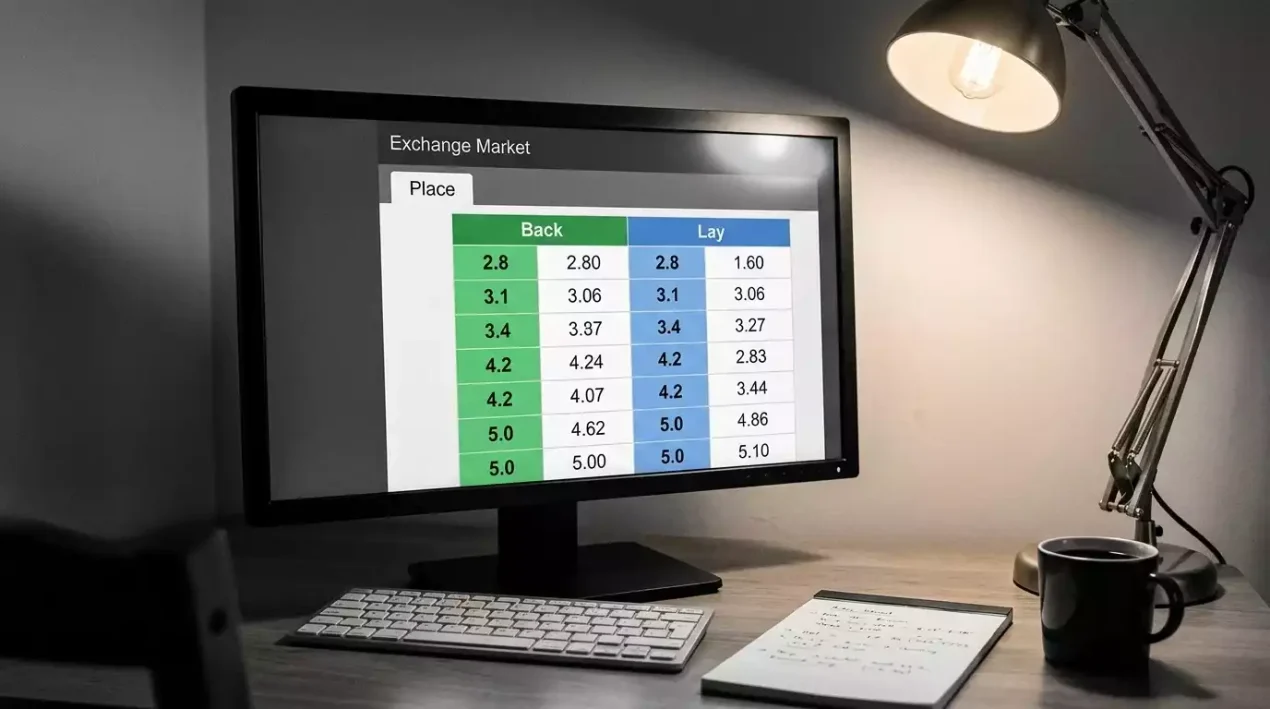
Exchange Liquidity: Navigating Spreads and Commission Rates
Goodwood, last race of the day, a 5/1 shot in the place market I’d backed at 3.4 on the exchange three days before the race. The horse drifted to 4.2 on race morning — meaning the lay price was higher than my back price, an immediate locked-in profit if I traded out. I held. Greed. The horse ran a stinker and finished sixth. The locked profit I could have taken at 11am dissolved into a losing place ticket by 4:15pm. That is the exchange place market in microcosm — it offers genuine pricing flexibility that fixed-odds cannot match, and most punters lose money learning what to do with it.
Betting exchanges have been a permanent feature of the UK market since the early 2000s. The place market — distinct from the win market — opens up a parallel layer of trading where you can back a horse to place at one price and lay it off at another, in or out of running, with millisecond pricing updates and full liquidity on the major meetings. The mechanics are unfamiliar to anyone whose betting life has been spent at high-street counters, but the underlying logic is straightforward once you stop thinking like a punter and start thinking like a market.
I have been trading place markets on the exchange for years. The lessons that stuck are not about clever staking systems or magical entry points. They are about discipline, liquidity awareness, and accepting that the exchange is a market, not a bookmaker, and your job in a market is to find prices that are wrong and trade against them.
What the place market actually is on an exchange
The place market is a separate, self-contained market that settles on whether a horse finishes in the qualifying placed positions for that race. It is not a derivative of the win market — it has its own back and lay prices, its own liquidity, its own volatility. A horse can drift in the win market and steam in the place market simultaneously when bettors are downgrading its winning chance but maintaining their view that it will run well enough to place.
Place market settlement follows standard UK racing place terms — two places for fields of five to seven, three for eight to fifteen, four for handicaps with sixteen or more. The exchange applies dead-heat rules in the standard way, dividing stake by the number of horses tied for the placed position. Commission applies to net winnings only, not gross — typically 2 to 5 percent depending on the exchange and the account tier.
Where the exchange place market diverges from fixed-odds each-way is in the structural separation. You are not buying a combined win-and-place bundle as you do with each-way. You are buying or selling a clean place outcome. This matters for pricing because it strips out the win-element optionality. A 25/1 outsider in the win market with a strong stayer profile might trade at 4.5 in the place market — implying roughly a 22 percent place probability — and the price reflects the place-only probability directly without the noise of win-only thinking.
The other major difference is the bidirectional nature. On the exchange you can lay a horse to place, meaning you take the opposite side — you collect money if the horse doesn’t place and pay out if it does. This opens up trading strategies that are simply not available in the fixed-odds world. The same horse can be backed and laid at different prices to lock in profit or limit downside.
Liquidity is everything and most of it lives on a handful of meetings
The single biggest constraint on exchange place market betting is liquidity. The place market on a Saturday Ascot handicap might carry £100,000 to £200,000 of matched money, comfortably enough to absorb four-figure trades without moving the price. The place market on a Tuesday afternoon handicap at Ffos Las might carry £2,000 across the whole field, which means a £200 stake on one horse meaningfully shifts the price against the next trade.
This liquidity asymmetry shapes everything about how you use the exchange place market. On featured meetings — Cheltenham Festival, Royal Ascot, Goodwood, York, Newmarket Guineas weekend, Aintree Grand National meeting — the place market is a genuine institutional-grade market with tight spreads, fast execution and reliable pricing. On midweek lower-grade meetings, the market is thin, the spread between back and lay can be 20 to 30 percent, and any meaningful stake is going to be marked up against you simply because there’s no one on the other side.
The practical rule I follow is to check the matched volume on the place market before committing. Major meetings: trade with confidence. Midweek racing at smaller tracks: stick to fixed-odds unless you find a very obvious mispricing that justifies accepting the wide spread. The exchange is not always the best venue, and pretending otherwise costs money.
The trade structures that actually pay over time
Three patterns of place market trading I have found genuinely productive. None of them are magic. All of them require you to do work the casual punter doesn’t.
The early-price trade. Back a horse in the place market three to five days before the race at a price you believe is generous, then look to trade out closer to the off if the price tightens. Example: back a 5/1 stayer at 3.0 in the place market Wednesday for Saturday’s race. Form study reveals the horse is well suited, the trainer is in form, and you expect public money to move the price. By Friday evening the back price has come in to 2.4. You can lay off at 2.4 — locking a profit on roughly 20 percent of the position — or hold the full position to settlement. The choice depends on your view of the residual risk.
The morning-of-race drift trade. Some horses drift in the place market on race morning even when the underlying form case has not changed. Often this happens because public money concentrates on a few favourites and outsiders get neglected. A horse you fancied at 4.0 on Friday might be available at 5.5 on Saturday morning. If the form case still stands, this is straightforward value — bet at 5.5 and accept that the implied probability has dropped without justification. I find this trade most often on apprentice handicaps and midweek six-runner conditions stakes where the market is less efficient.
The in-running place trade. The exchange continues to match bets while the race is running, and place market prices update in real-time based on the position of each horse. A horse that breaks well and travels strongly through the early stages will see its place price tumble — back at 4.0 pre-race, in-running price might be 1.6 with a furlong to go if the horse is sitting in second place. Laying off at 1.6 locks in a profit regardless of whether the horse holds on for a placed finish. This is the riskiest of the three structures because it requires real-time judgement and reliable internet, but it is also where the largest single-race returns come from.
The trade I do not recommend is the pure speculative lay — laying a favourite to place purely because you think it’s overpriced. The liability is asymmetric and unforgiving. Lay a 1.5 shot at £100 and you risk £50 to win £100 — but you risk that £50 against an outcome the market judges to be roughly 67 percent probable. Long-run expected return on speculative lay-to-place trades on short-priced favourites is consistently negative in my own records.
Commission, spreads and the true cost of trading
Commission is the headline cost but it is not the only cost. The bid-ask spread on the place market is the hidden cost most new exchange punters fail to account for.
On a deeply liquid market — Saturday Group 1 at Ascot — the spread between back and lay prices on a place selection might be 2.8 to 2.9. That is a 3.5 percent spread, paid every time you cross the bid to the ask. On a thin midweek market, the spread might be 3.2 to 3.8. That is 19 percent. Trade through that spread twice — once to enter, once to exit — and you are paying nearly 40 percent of your matched stake in spread cost, before commission.
This is why the exchange suits patient bettors more than impulsive ones. Setting your own price — placing a back order at a price below the current matched ask and waiting for someone to take it — is how serious exchange punters trade. You become a market maker rather than a market taker. Your edge comes from being patient enough to let other punters cross your spread rather than crossing theirs.
Commission rates compound the structural advantage of patient pricing. A 5 percent commission rate on a 10 percent winning position takes 0.5 percent off your return. The same 5 percent commission on a 50 percent return takes 2.5 percent — still small relative to the spread costs you avoided by being patient. The cumulative effect over a year of disciplined exchange place trading is substantial.
One overlooked detail. Commission is charged on net winnings per market, not per bet. If you back one horse and lay another in the same place market, your commission liability is based on the net outcome. This makes hedging trades structurally cheaper than they look — the offsetting positions don’t double your commission cost.
The regulatory layer that makes UK exchange betting trustworthy
UK-licensed exchanges operate under the same Gambling Commission framework as traditional bookmakers, with additional requirements specific to peer-to-peer betting. Customer funds must be segregated, market integrity reporting is mandatory, and the exchange has explicit obligations around suspicious betting pattern detection. The Commission’s enforcement record — 741 cease-and-desist notices issued in recent enforcement years against illegal operators, with 1,134 illegal sites disrupted — gives a sense of how seriously the regulatory perimeter is policed.
For an individual punter, what this means in practice is that your matched stake on a UK-licensed exchange is held in protected client money accounts, your trades are matched against verified counterparties (not the house), and the exchange has a legal obligation to flag patterns suggesting insider information or race-fixing. The integrity layer is what makes the exchange a legitimate venue rather than a grey-market platform, and it is the same regulatory architecture that protects you when you use any UK-licensed betting service. The exchange is one entry point in a broader regulated market — for a fuller view of how the regulation operates across the wider place-betting landscape, the structure of the UK place betting regulation framework ties together how exchange, fixed-odds and pool betting are all governed within the same Commission perimeter.
Exchange place trading is a skill, not a shortcut
The most honest thing I can say about exchange place markets is that they reward people who put in serious work and consistently disappoint people who don’t. The bidirectional pricing, the in-running flexibility, the absence of bookmaker stake restrictions — all of these features look like advantages, and they are, but only to punters with the discipline and the form-reading skill to identify mispricings and the patience to wait for them.
The casual flutterer is consistently better off using fixed-odds bookmakers with Best Odds Guaranteed and place terms promotions. The serious form student with time to spend on race-day pricing is consistently better off on the exchange where the spreads are tighter and the value clusters in different places. Neither is wrong. They are simply different bets being played by different punters with different time horizons and different tolerance for screen time.
Why is the place market on the exchange separate from the win market?
The exchange treats place outcomes as a distinct market with its own back and lay prices. This allows pricing to reflect place-only probability directly, independent of win probability, and gives traders the flexibility to take positions on place outcomes without bundling them with win bets.
Can I lay a horse to place on the exchange?
Yes. Laying a horse to place means you collect money if the horse fails to finish in the qualifying placed positions and pay out if it does place. The liability is calculated based on the lay odds and stake.
Why does exchange commission only apply to net winnings?
Commission is charged on the net result per market rather than gross stakes. This makes hedging and offsetting positions structurally cheaper because losing positions reduce the commission base.
This material was created by the PlaceLedger team.
Related posts
In-Play Place Market Mechanics: How Live Pricing Actually Works During a Race

UK Betting Taxation: How the Punter’s Tax-Free Status Actually Works